
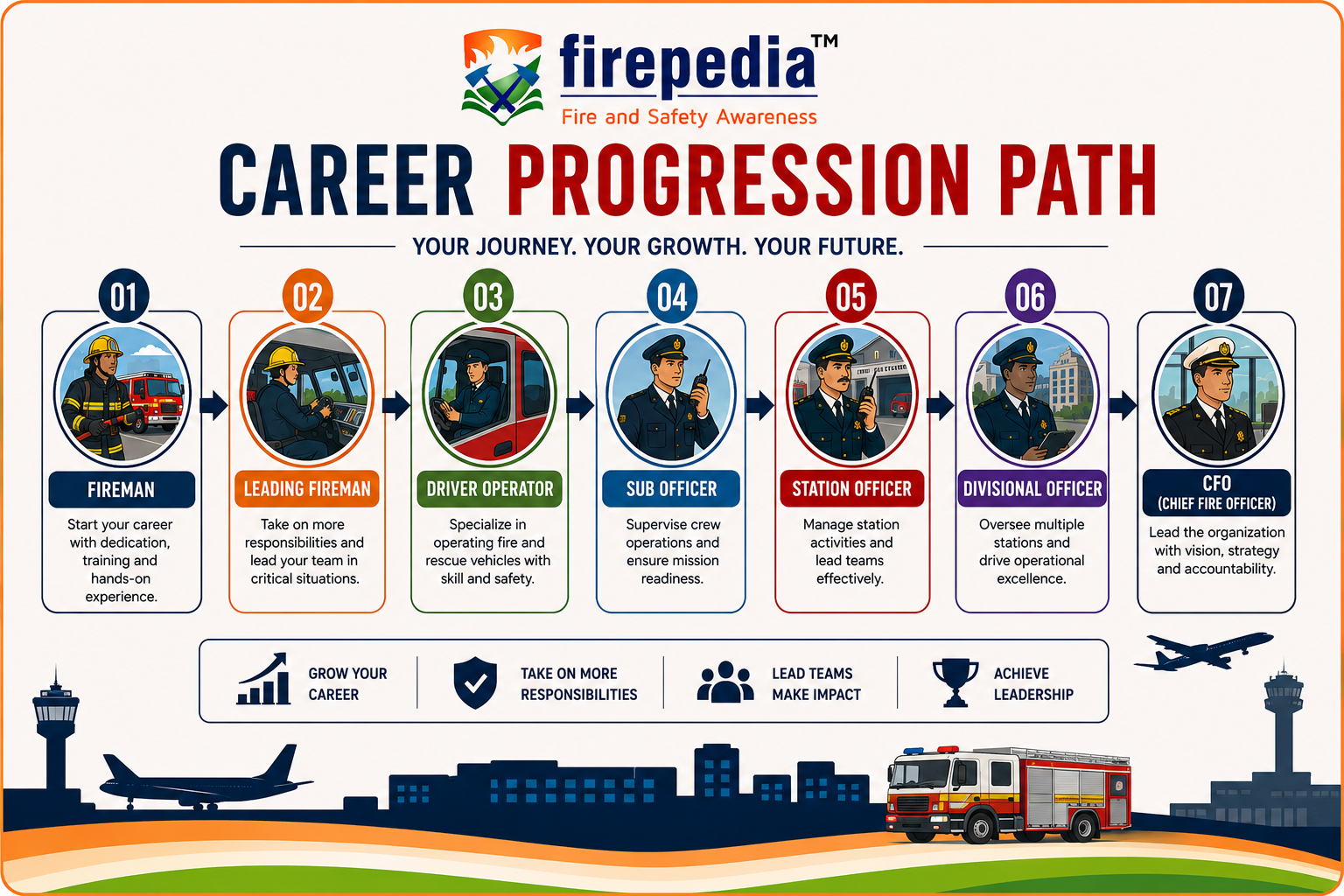
This infographic explains the Career Progression Path in Fire and Safety Services, especially in airport and emergency firefighting operations. It shows how a person can advance from an entry-level Fireman to the top leadership role of Chief Fire Officer (CFO). The journey includes positions such as Leading Fireman, Driver Operator, Sub Officer, Station Officer, and Divisional Officer, each carrying greater responsibility and leadership duties. These roles involve firefighting, rescue operations, emergency response, crew supervision, and station management. The infographic also highlights career benefits like continuous learning, leadership development, operational expertise, career growth, and opportunities for long-term success in the fire and safety industry.
State Fire Services conduct direct recruitment exams/interviews to hire eligible candidates for several posts based on the vacancies. In general direct recruitment is from Fireman / Fire Operator level to Divisional Officer level. We have referred past direct recruit advertisements of some State Fire Services for listing required qualifications to join fire service. These essential qualifications are for reference only and willing persons shall subscribe to "Employment Newspaper" for advertisements and requirements.
| Post | Minimum Education |
Professional Qualification |
Experience | Driving License |
|---|---|---|---|---|
| Fireman | 10th Pass | — | No | Heavy Vehicle Preferred |
| Sub Officer | Science Degree | Sub Officer Course | 1 Year (if applicable) | Preferred |
| Station Officer | Degree / B.E. Fire | Station Officer Course |
Preferred | Preferred |
| Divisional Officer | Degree / B.E. Fire | Divisional Officer Course |
Preferred | Preferred |
Difference Between Diploma, Degree & NFSC Courses
This comparison explains the major differences between Diploma, Degree, and NFSC courses in the fire and safety field. A Diploma in Fire Safety is usually a one-year program suitable for students after 10th or 12th grade and is mainly focused on quick employment opportunities in the private sector. A B.E. in Fire Engineering is a four-year professional degree for students with a 12th PCM background and prepares candidates for technical and officer-level positions. NFSC courses are specialized government-recognized programs generally meant for graduates and are ideal for careers in government fire services, advanced firefighting, rescue operations, and leadership roles.
| Qualification | Duration | Eligibility | Suitable For |
|---|---|---|---|
| Diploma in Fire Safety | 1 Year | 10th/12th | Private Sector |
| B.E. Fire Engineering | 4 Years | 12th PCM | Officer Roles |
| NFSC Course | Varies | Graduate | Government Fire Services |