

AI in Fire and Safety in India
Artificial Intelligence (AI) is transforming the fire and safety industry in India by improving prevention, monitoring, emergency response, and disaster management. With rapid urbanization, industrial growth, smart city development, and increasing infrastructure projects, the need for advanced fire safety systems has become more important than ever. AI-powered technologies are helping industries, airports, hospitals, schools, malls, residential buildings, and government organizations detect risks faster and respond more effectively during emergencies.
AI in fire and safety combines technologies such as machine learning, smart sensors, computer vision, drones, robotics, predictive analytics, and real-time monitoring systems. These solutions help reduce human error, improve operational efficiency, and save lives by enabling faster decision-making during critical situations.
Below are important AI use cases followed in fire and safety to improve prevention, monitoring, and emergency response.
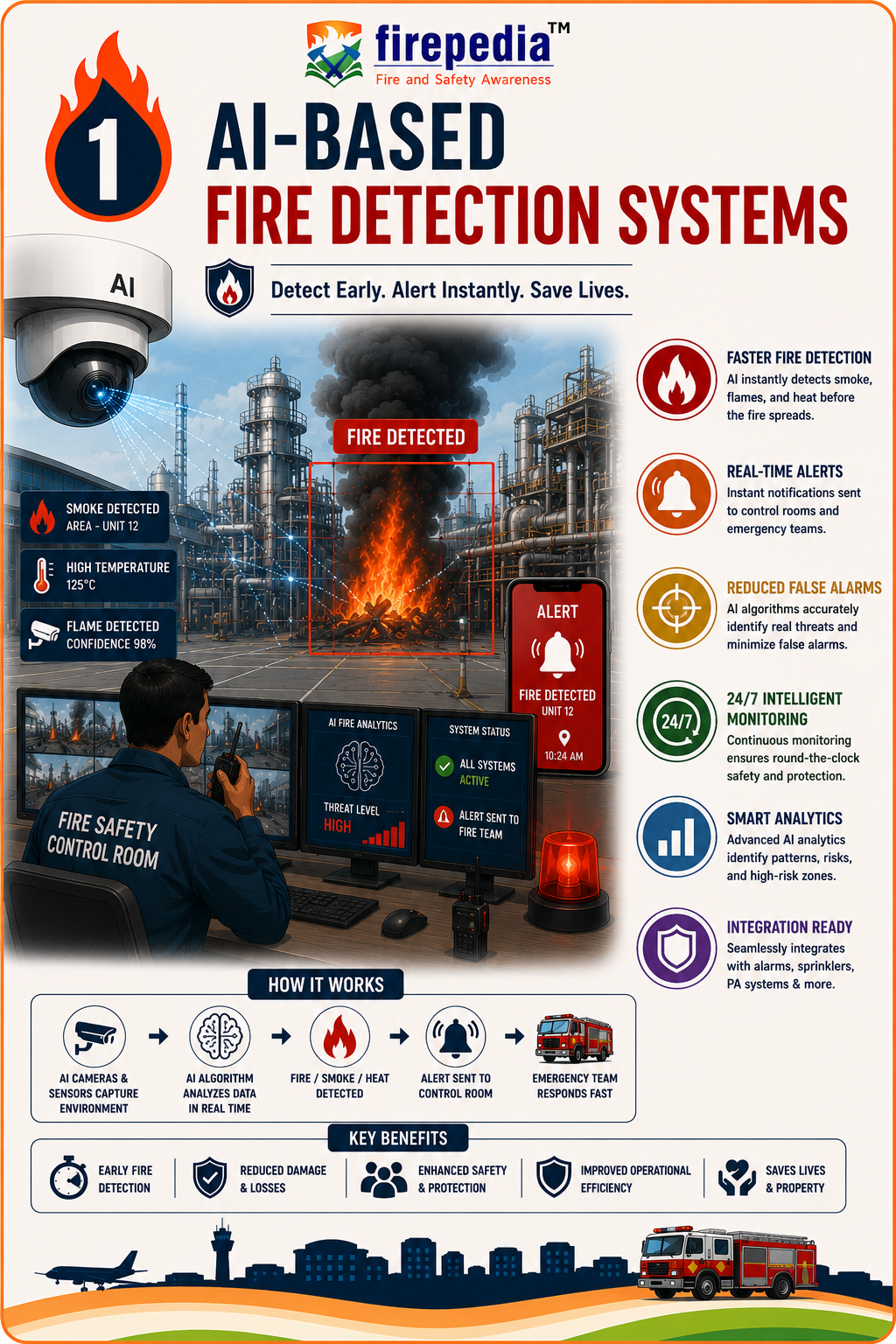
1. AI-Based Fire Detection Systems
Traditional smoke detectors may sometimes delay detection, but AI-powered fire detection systems can identify smoke, flames, and heat patterns instantly through cameras and smart sensors.
Key Benefits
- Faster fire and smoke detection.
- Real-time alerts to emergency teams.
- Reduced false alarms.
- 24/7 intelligent monitoring.
- Improved safety in crowded areas.
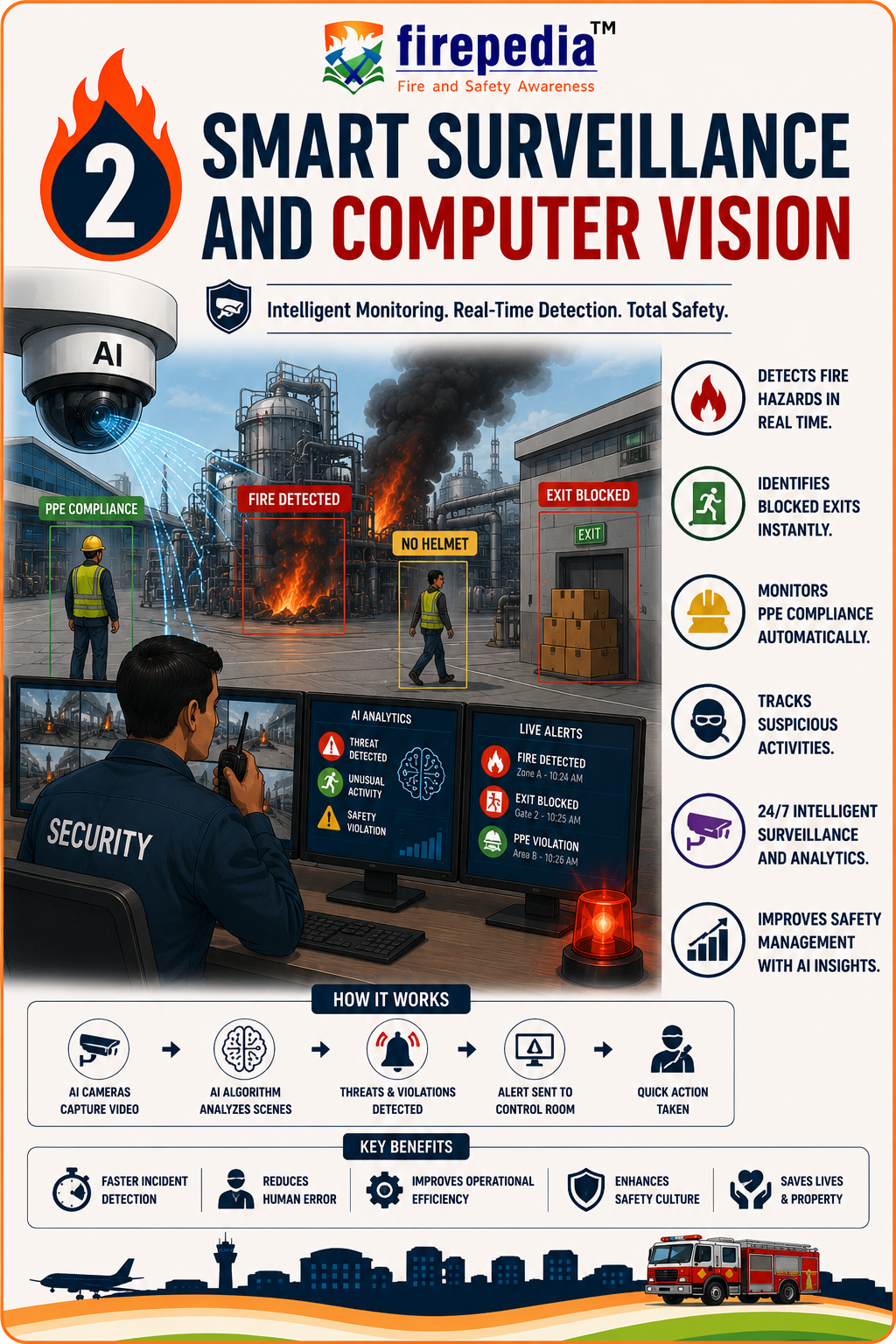
2. Smart Surveillance and Computer Vision
AI-enabled CCTV systems use computer vision to monitor hazardous situations and identify safety violations automatically.
Key Benefits
- Detects fire hazards in real time.
- Identifies blocked emergency exits.
- Monitors PPE compliance.
- Tracks suspicious activities.
- Improves industrial safety management.
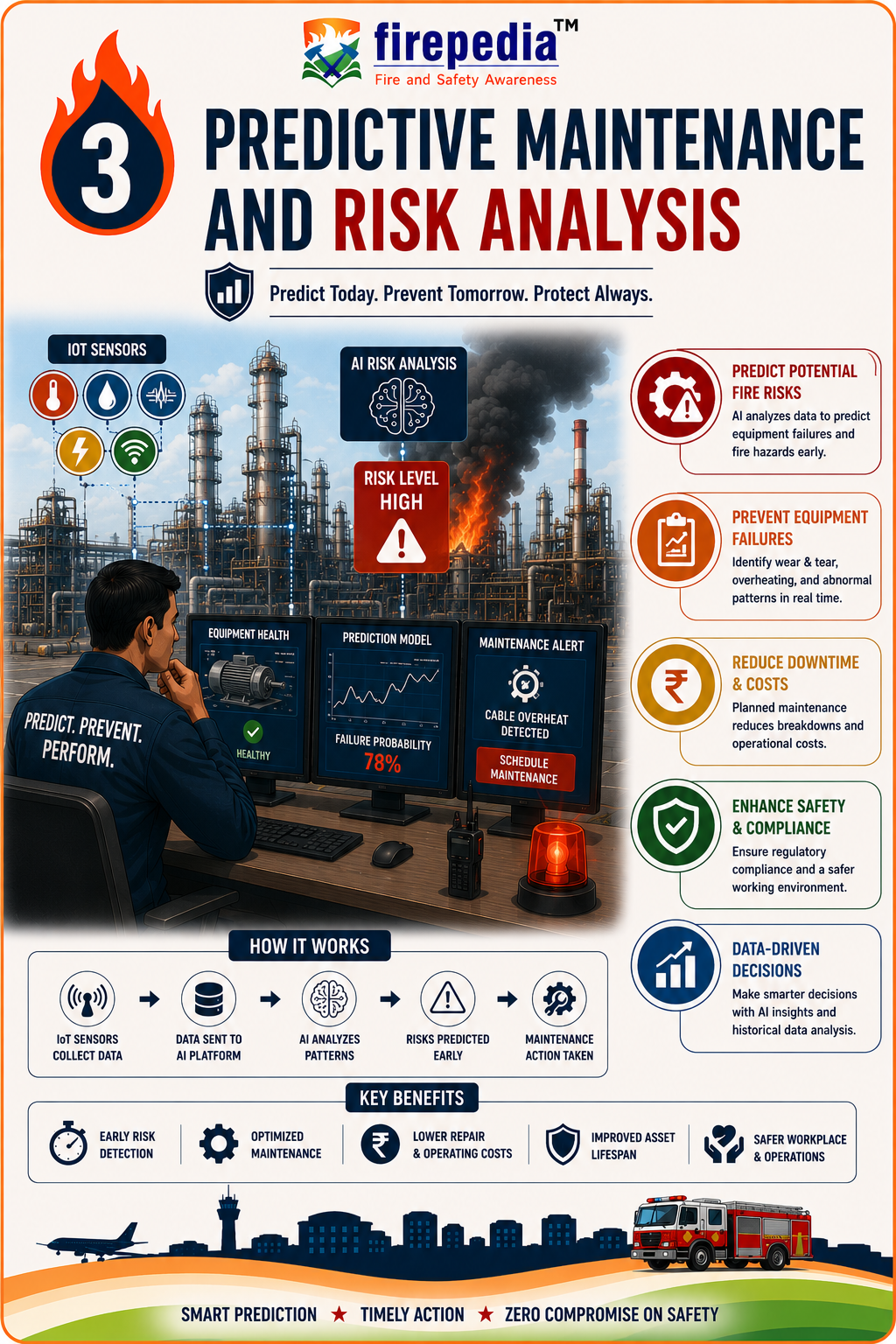
3. Predictive Maintenance and Risk Analysis
AI can analyze historical data, equipment performance, and sensor readings to predict potential fire risks before accidents occur.
Key Benefits
- Prevents electrical failures.
- Reduces equipment breakdowns.
- Identifies high-risk zones.
- Enhances preventive maintenance.
- Saves operational costs.
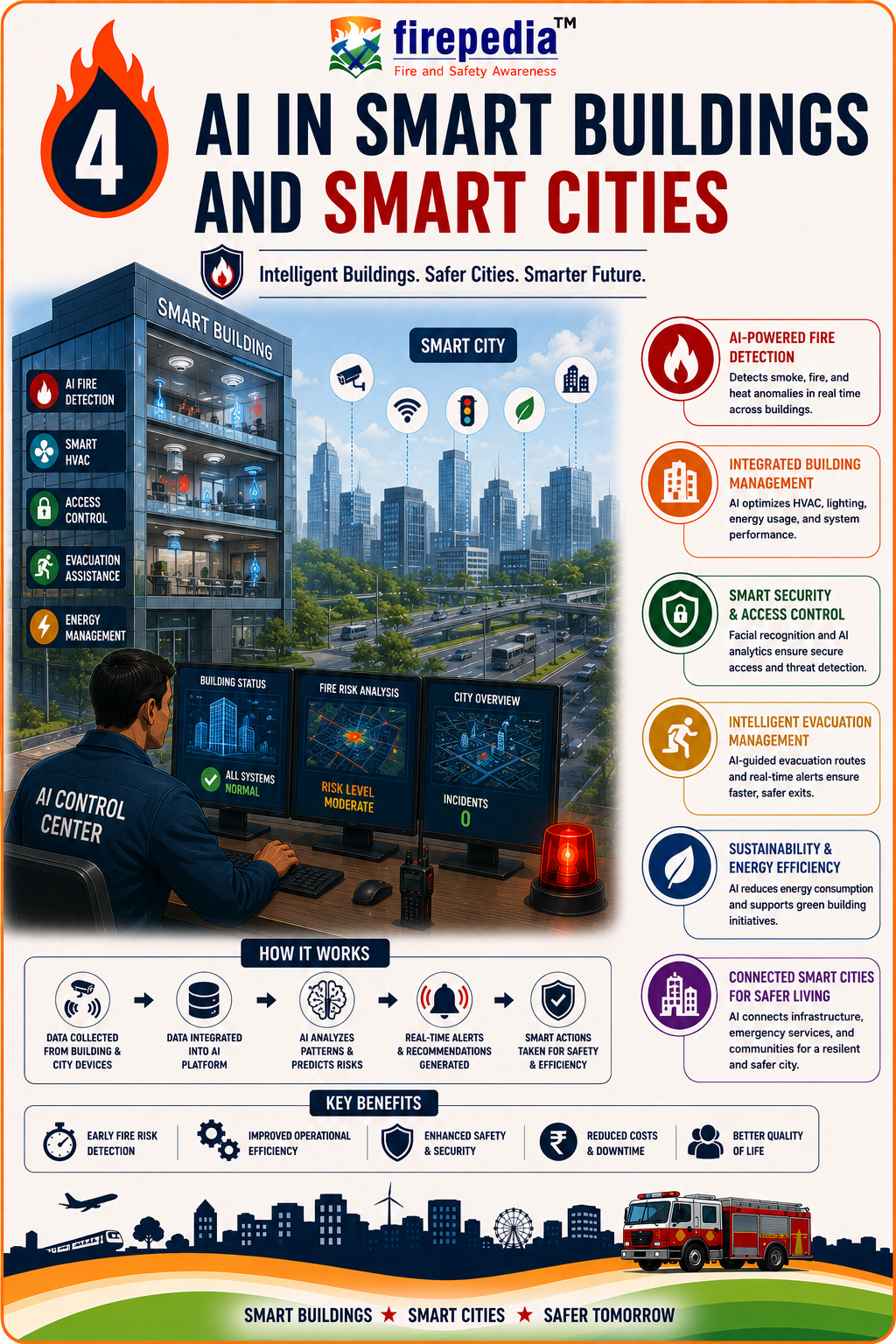
4. AI in Smart Buildings and Smart Cities
Modern smart buildings in India are integrating AI with fire alarms, ventilation systems, emergency lighting, and evacuation controls.
Key Benefits
- Automated emergency response.
- Intelligent evacuation guidance.
- Real-time building monitoring.
- Faster emergency communication.
- Better disaster management.
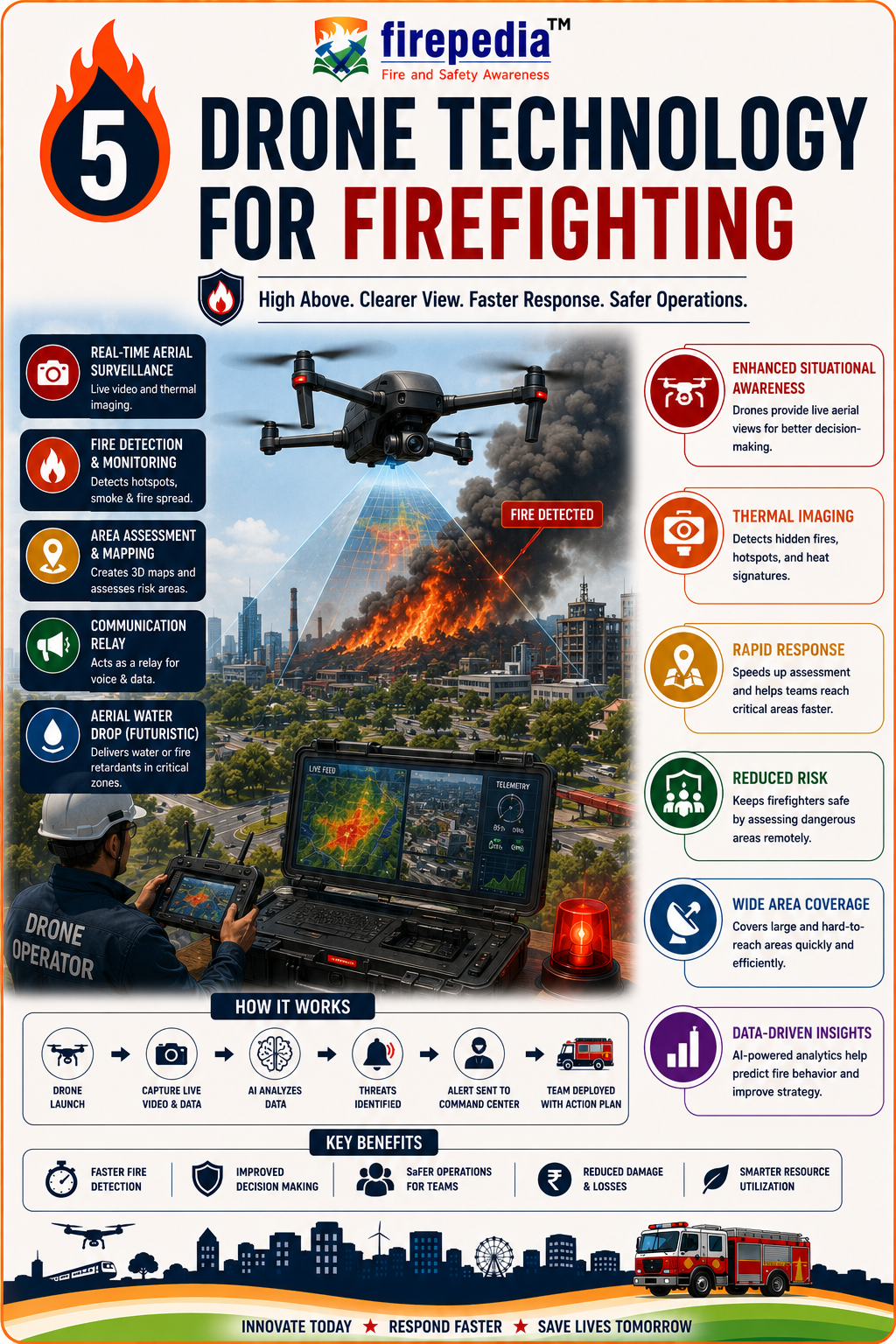
5. Drone Technology for Firefighting
AI-powered drones are increasingly used in firefighting and rescue operations to access dangerous or hard-to-reach locations.
Key Benefits
- Monitors large fire incidents.
- Provides aerial thermal imaging.
- Assists rescue operations.
- Improves firefighter safety.
- Supports disaster assessment.
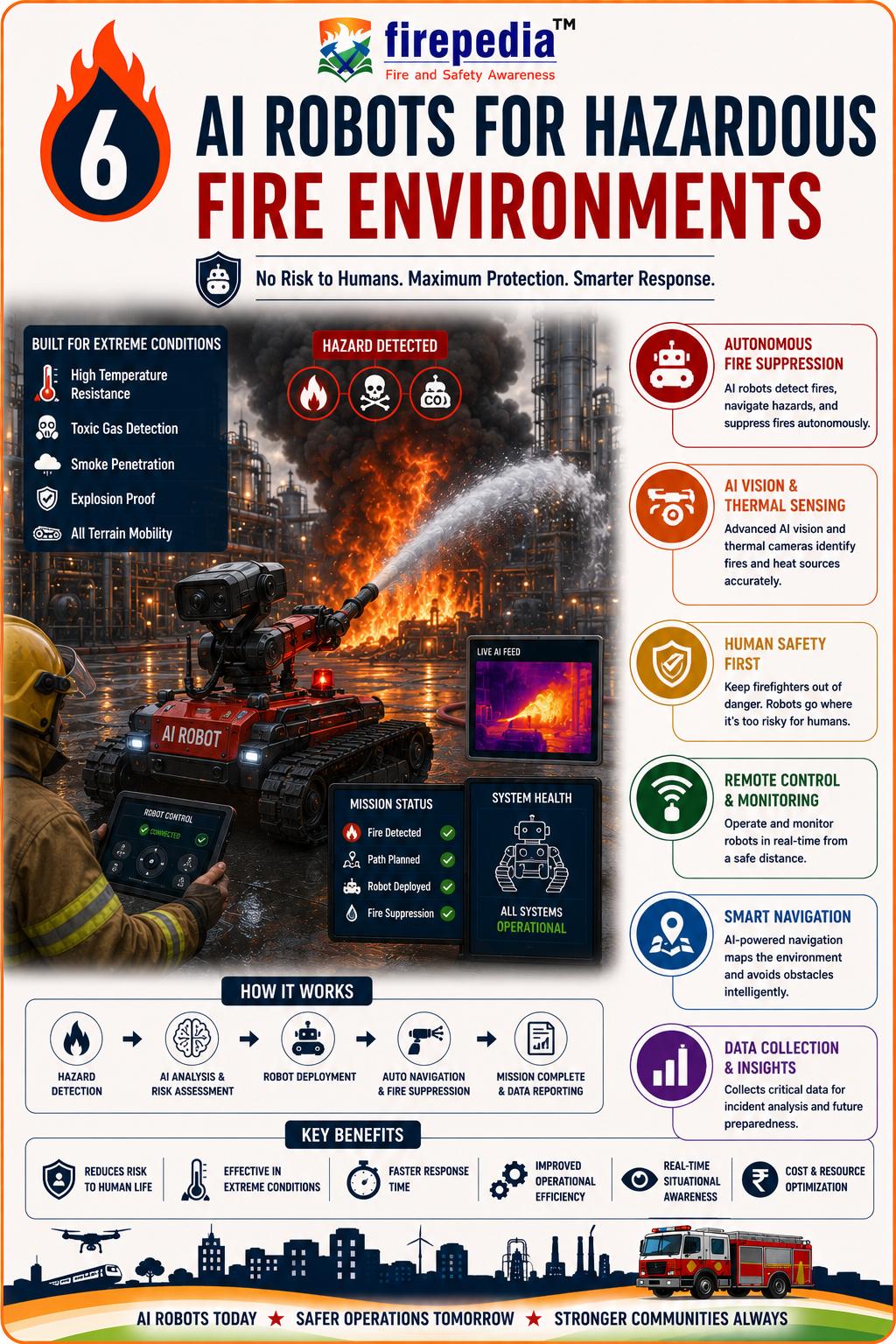
6. AI Robots for Hazardous Fire Environments
Robotic systems can enter high-temperature or toxic environments where human firefighters may face serious risks.
Key Benefits
- Operates in hazardous conditions.
- Reduces risk to firefighters.
- Detects toxic gases.
- Assists in industrial emergencies.
- Supports rescue missions.
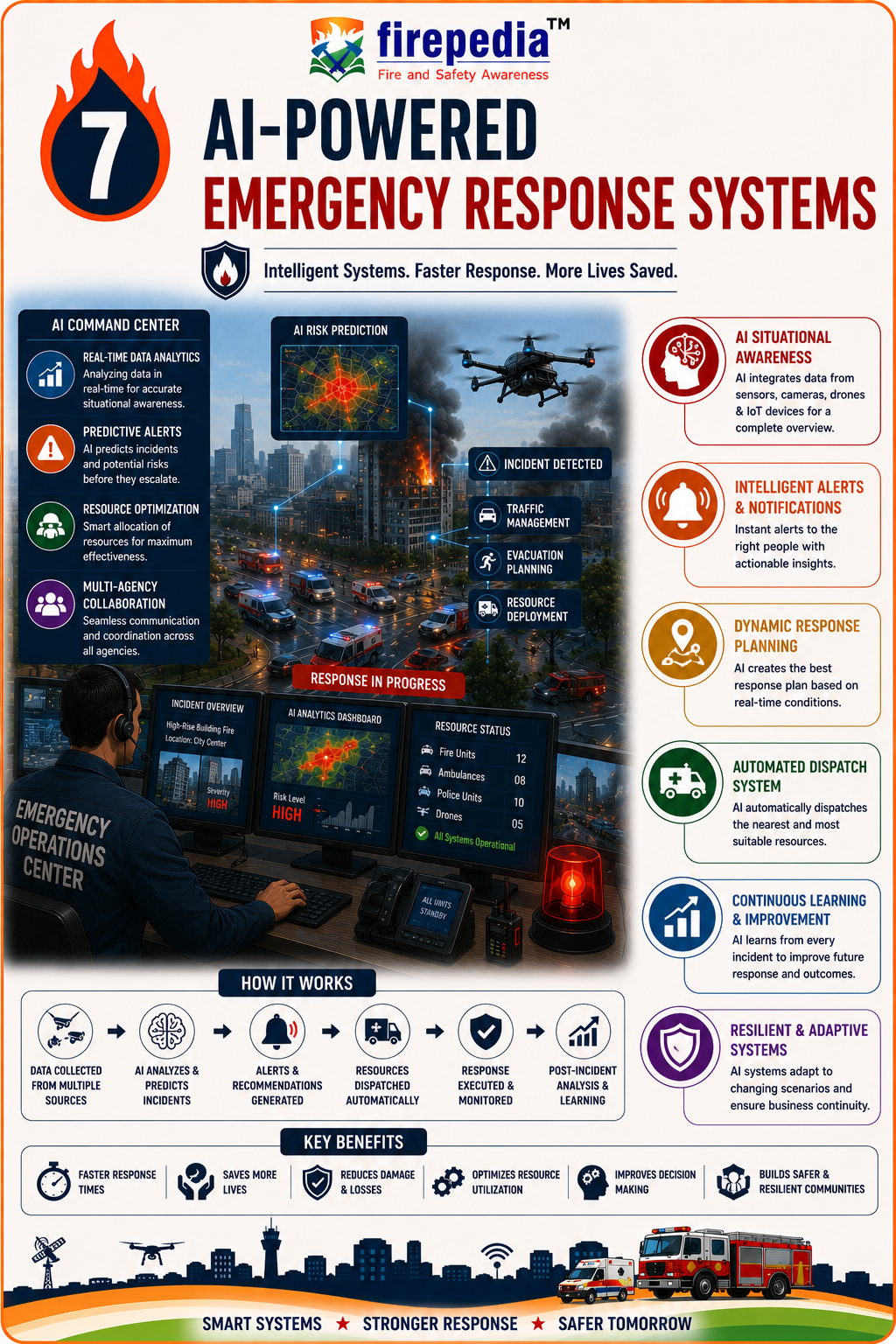
7. AI-Powered Emergency Response Systems
AI systems help emergency teams make faster decisions during disasters by analyzing real-time information from multiple sources.
Key Benefits
- Faster emergency coordination.
- Improved communication systems.
- Smart resource allocation.
- Reduced response time.
- Better crowd management.
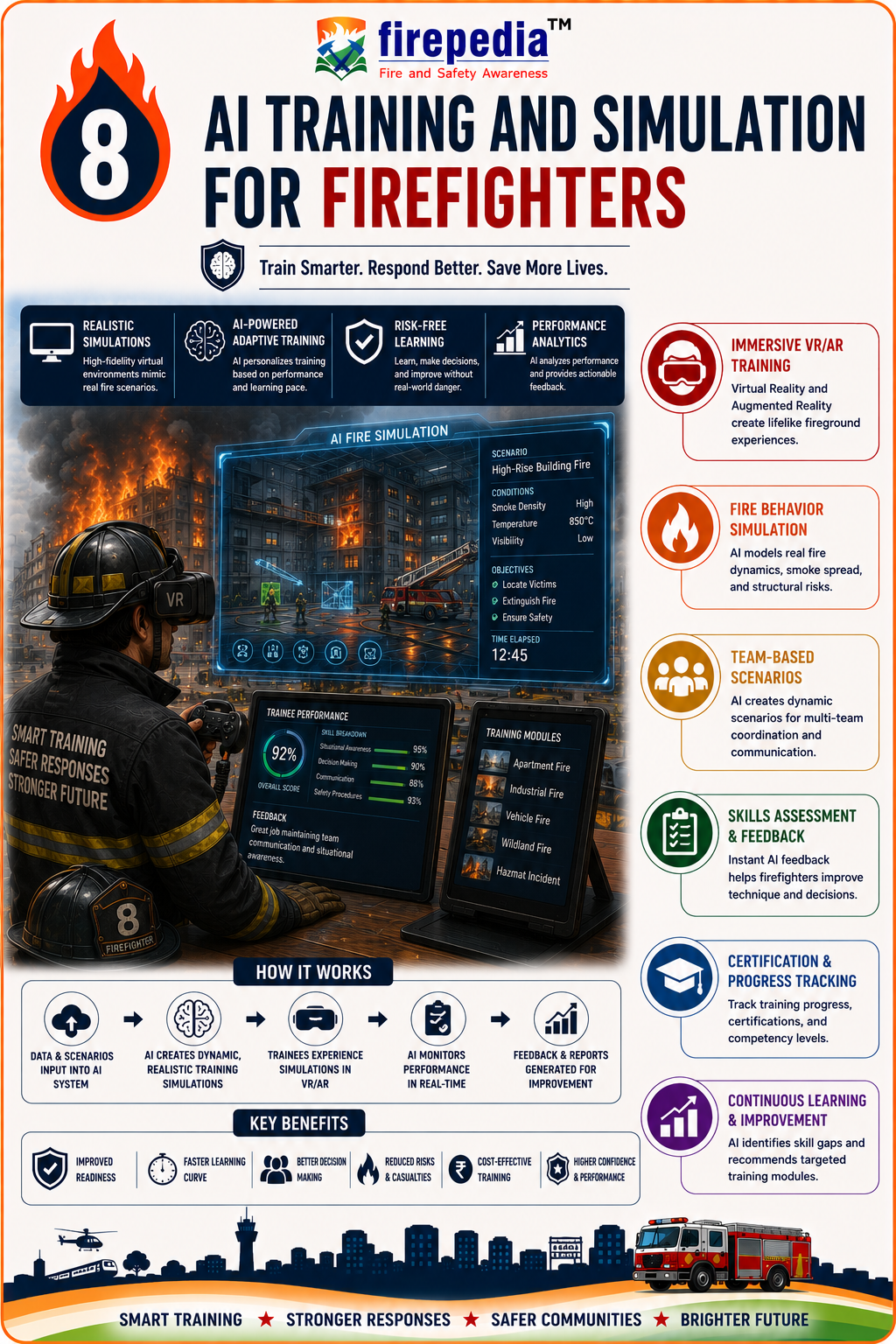
8. AI Training and Simulation for Firefighters
Virtual Reality (VR) and AI simulations are improving firefighter training by creating realistic emergency scenarios.
Key Benefits
- Safe practical training.
- Realistic fire simulations.
- Improved decision-making skills.
- Better emergency preparedness.
- Enhanced rescue training.
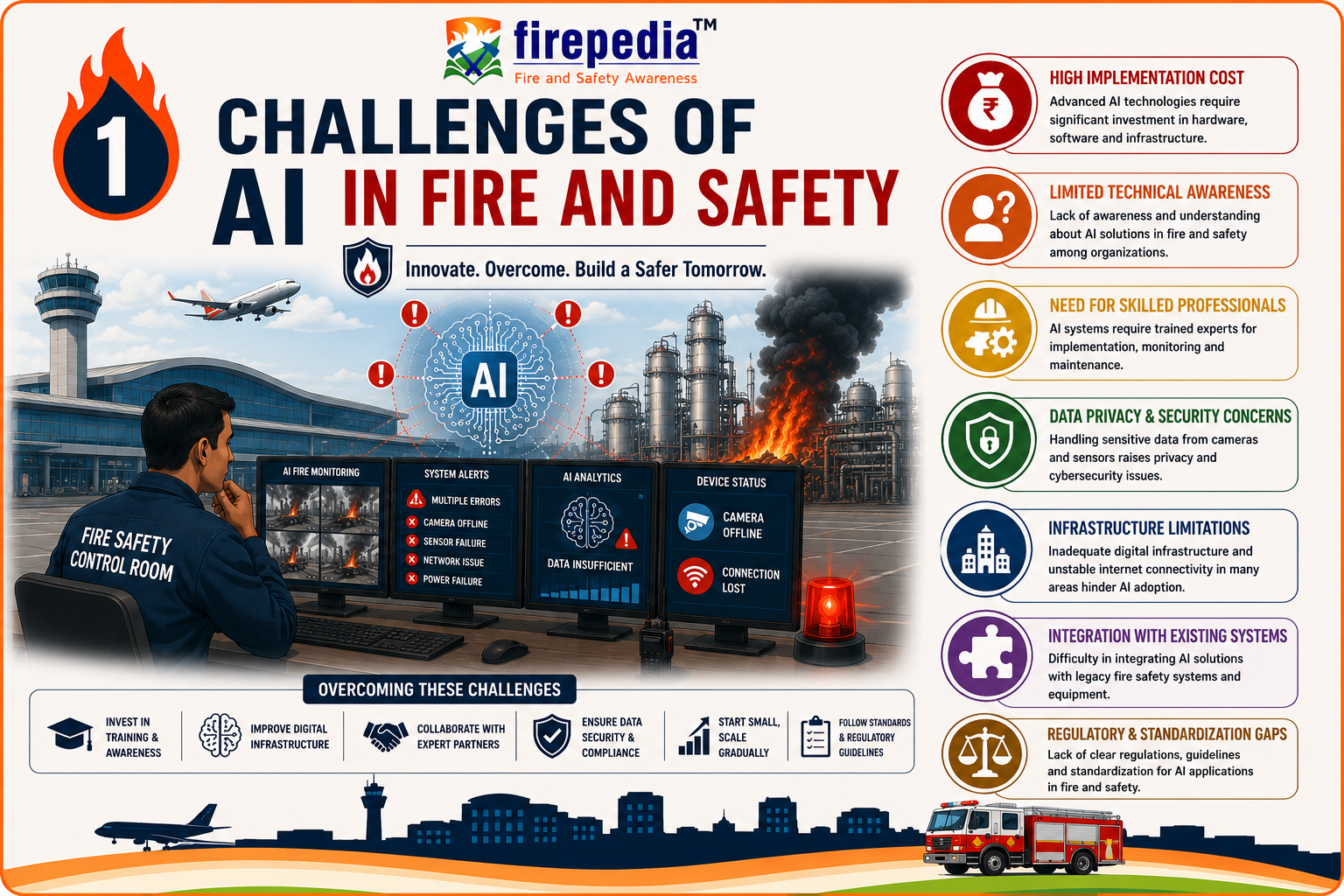
Challenges of AI in Fire and Safety
Despite its advantages, AI adoption in India still faces several challenges.
Major Challenges
- High implementation cost.
- Limited technical awareness.
- Need for skilled professionals.
- Data privacy concerns.
- Infrastructure limitations in smaller cities.
Future of AI in Fire and Safety in India
India is rapidly moving toward smart infrastructure and digital transformation. AI will continue to play a major role in improving public safety, industrial protection, and disaster management systems. Integration of AI with IoT, 5G, robotics, drones, and smart city technologies will further strengthen fire prevention and emergency response capabilities across the country.
Government initiatives, smart city projects, industrial automation, and airport modernization programs are expected to accelerate the adoption of AI-based fire and safety solutions in the coming years.
Conclusion
AI is revolutionizing the fire and safety sector in India by making systems smarter, faster, and more efficient. From intelligent fire detection and predictive maintenance to drones, robotics, and smart emergency response systems, AI technologies are helping reduce risks and save lives.
As India continues to develop smart cities and advanced infrastructure, AI-driven fire safety solutions will become increasingly important for protecting people, property, and critical facilities. The future of fire and safety in India will depend heavily on innovation, automation, and intelligent technologies powered by Artificial Intelligence.