

Fire & Safety at Airport
Airports are among the busiest and most sensitive public infrastructures in the world. Thousands of passengers, staff members, aircraft, fuel systems, electrical equipment, and cargo operations function simultaneously every day. Because of this complex environment, fire and safety management at airports is extremely important to protect lives, infrastructure, and aviation operations.
Airport fire safety involves prevention, emergency preparedness, rapid response systems, evacuation planning, and continuous monitoring. Specialized airport rescue and firefighting teams (ARFF) are trained to manage aircraft fires, fuel hazards, terminal emergencies, and evacuation procedures effectively.
Below are important fire and safety use cases followed at airports to maintain a secure and safe environment.
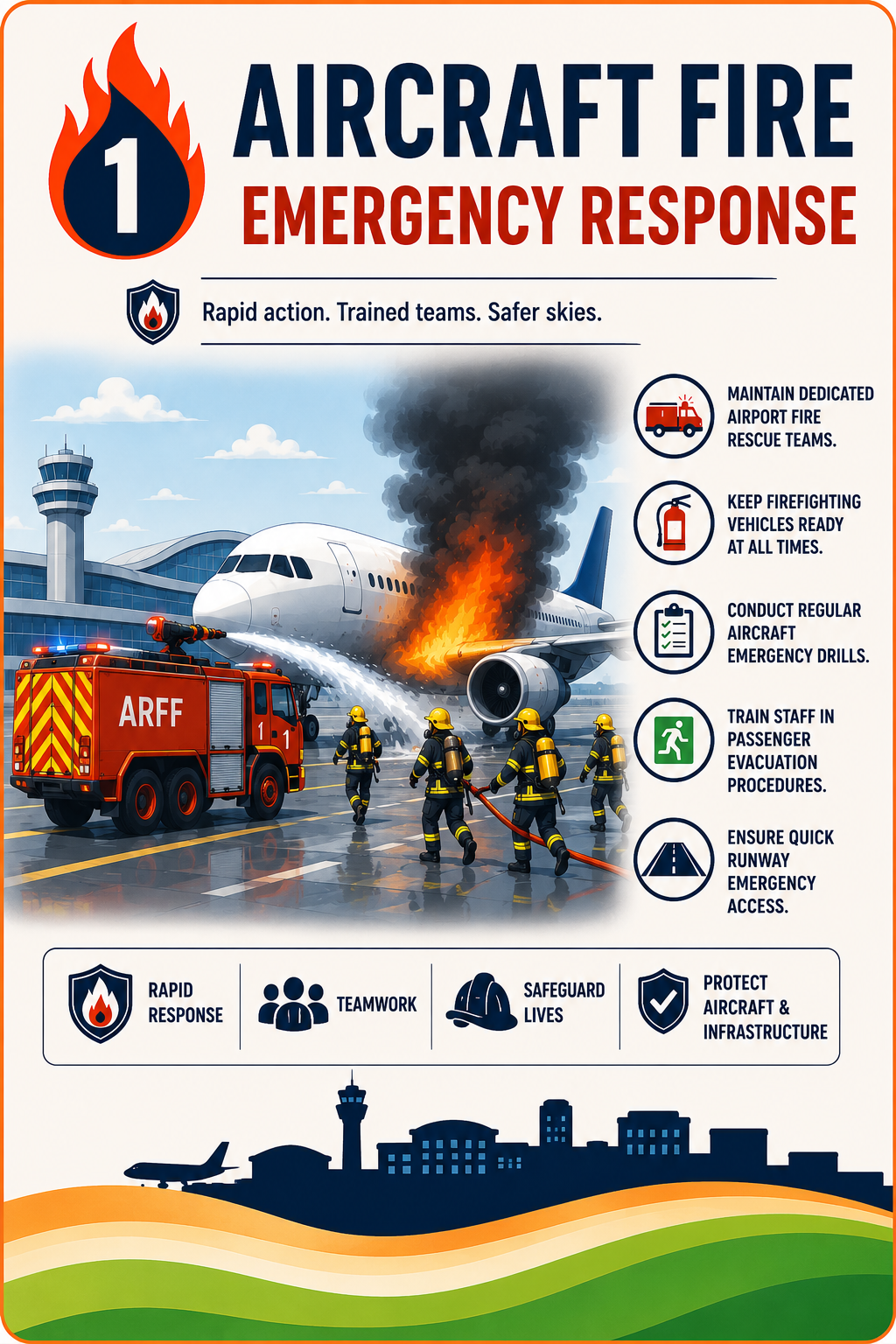
1. Aircraft Fire Emergency Response
Aircraft emergencies require rapid firefighting response to protect passengers, crew, and airport infrastructure.
Safety Tips
- Maintain dedicated airport fire rescue teams.
- Keep firefighting vehicles ready at all times.
- Conduct regular aircraft emergency drills.
- Train staff in passenger evacuation procedures.
- Ensure quick runway emergency access.
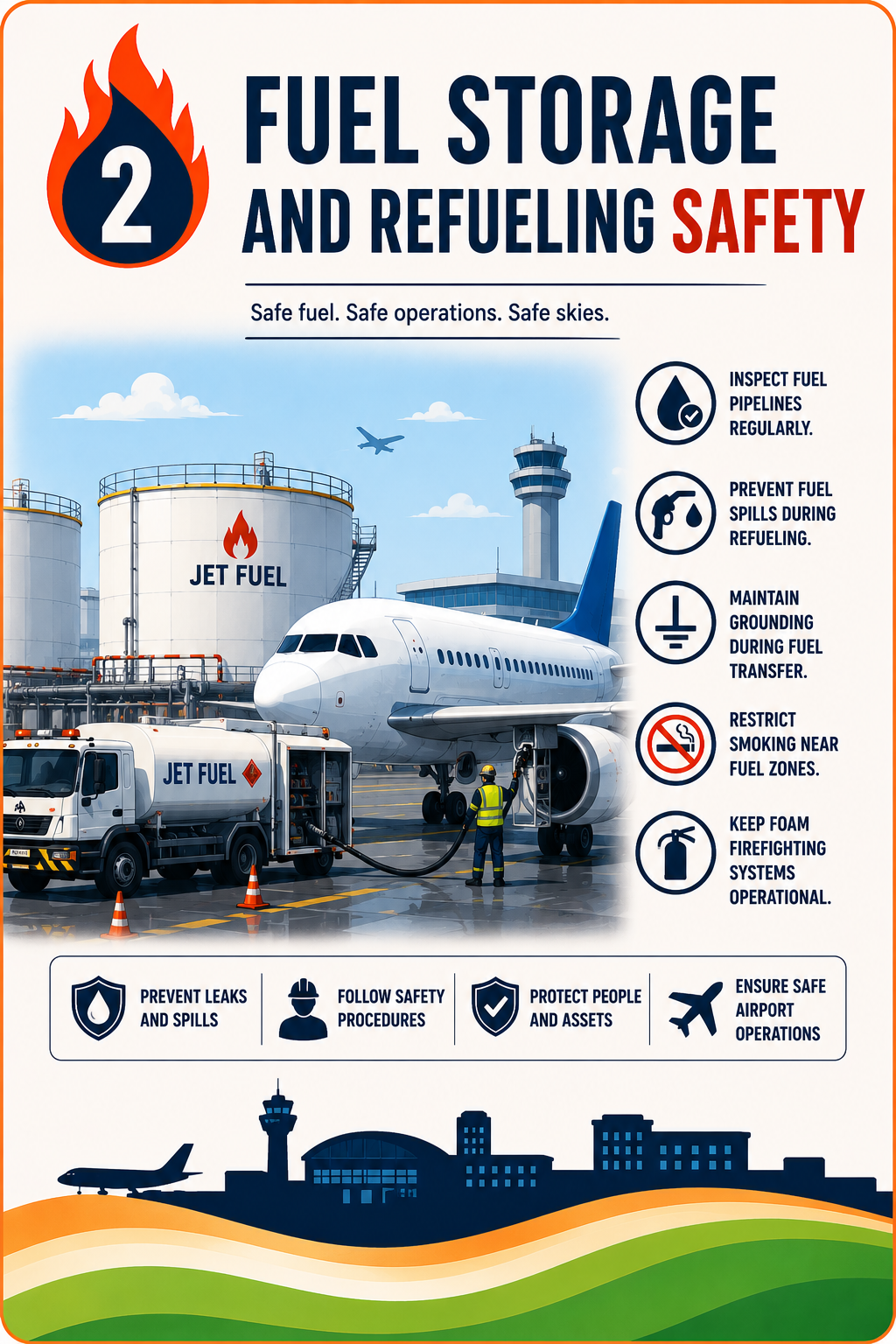
2. Fuel Storage and Refueling Safety
Airports store large amounts of aviation fuel, making fuel safety critical for preventing fires and explosions.
Safety Tips
- Inspect fuel pipelines regularly.
- Prevent fuel spills during refueling.
- Maintain grounding during fuel transfer.
- Restrict smoking near fuel zones.
- Keep foam firefighting systems operational.
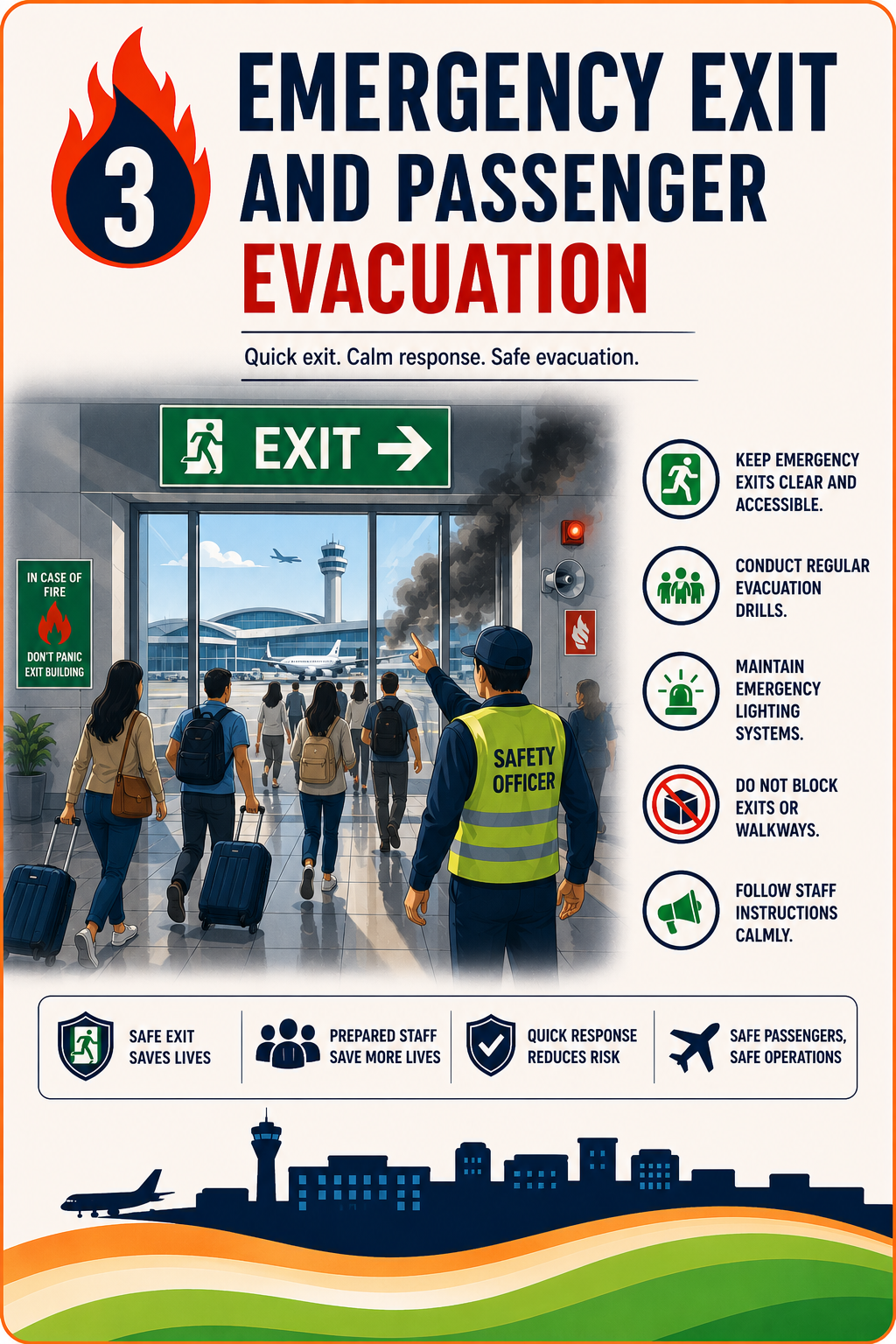
3. Emergency Exit and Passenger Evacuation
Airports must ensure safe evacuation during fires, smoke incidents, or other emergencies.
Safety Tips
- Clearly mark all emergency exits.
- Conduct evacuation drills regularly.
- Maintain unobstructed evacuation pathways.
- Install emergency lighting systems.
- Train airport staff for crowd management.
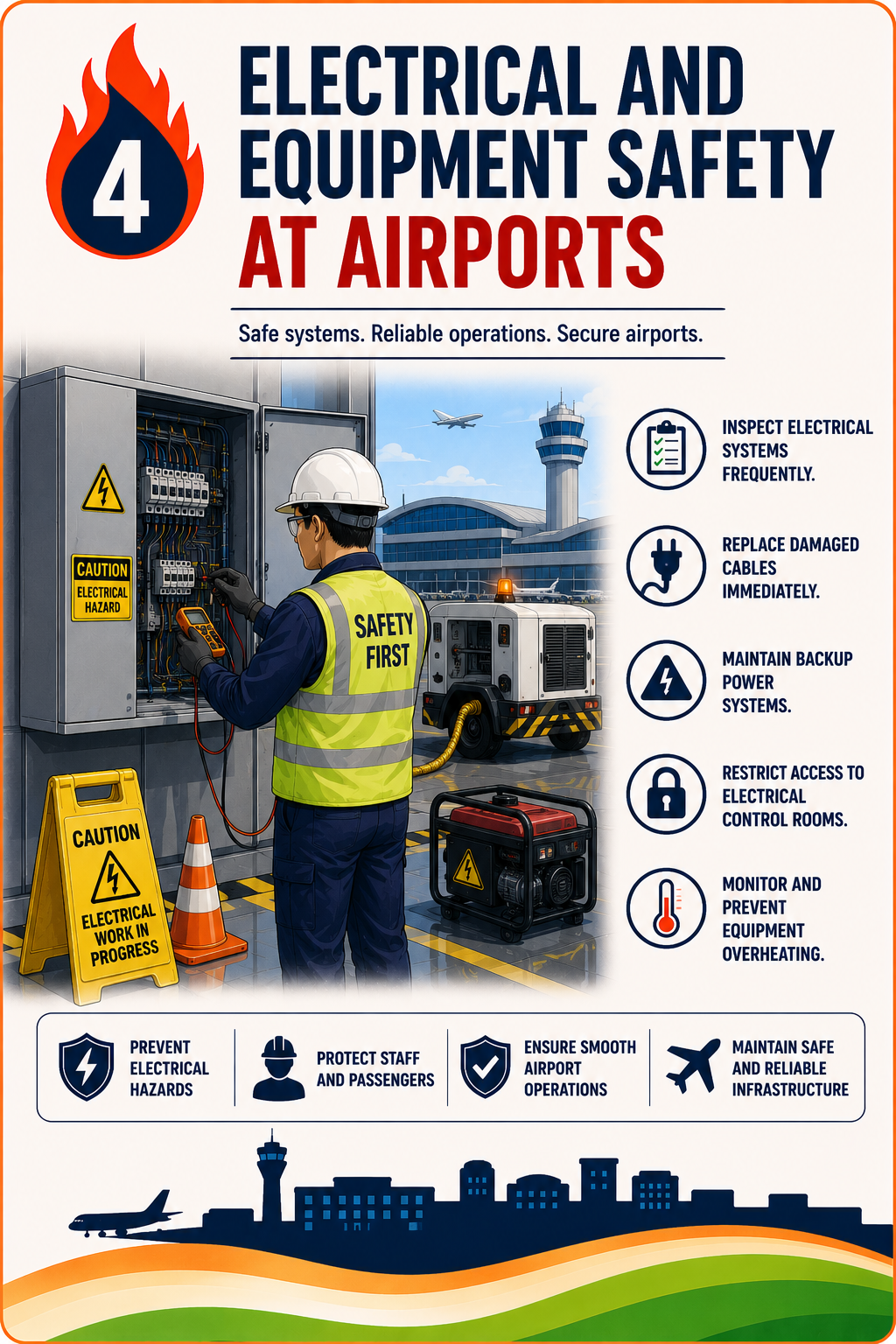
4. Electrical and Equipment Safety at Airports
Airports use complex electrical systems, communication equipment, and baggage handling machinery that require strict safety management.
Safety Tips
- Inspect electrical systems frequently.
- Replace damaged cables immediately.
- Maintain backup power systems.
- Restrict access to electrical control rooms.
- Monitor overheating equipment continuously.
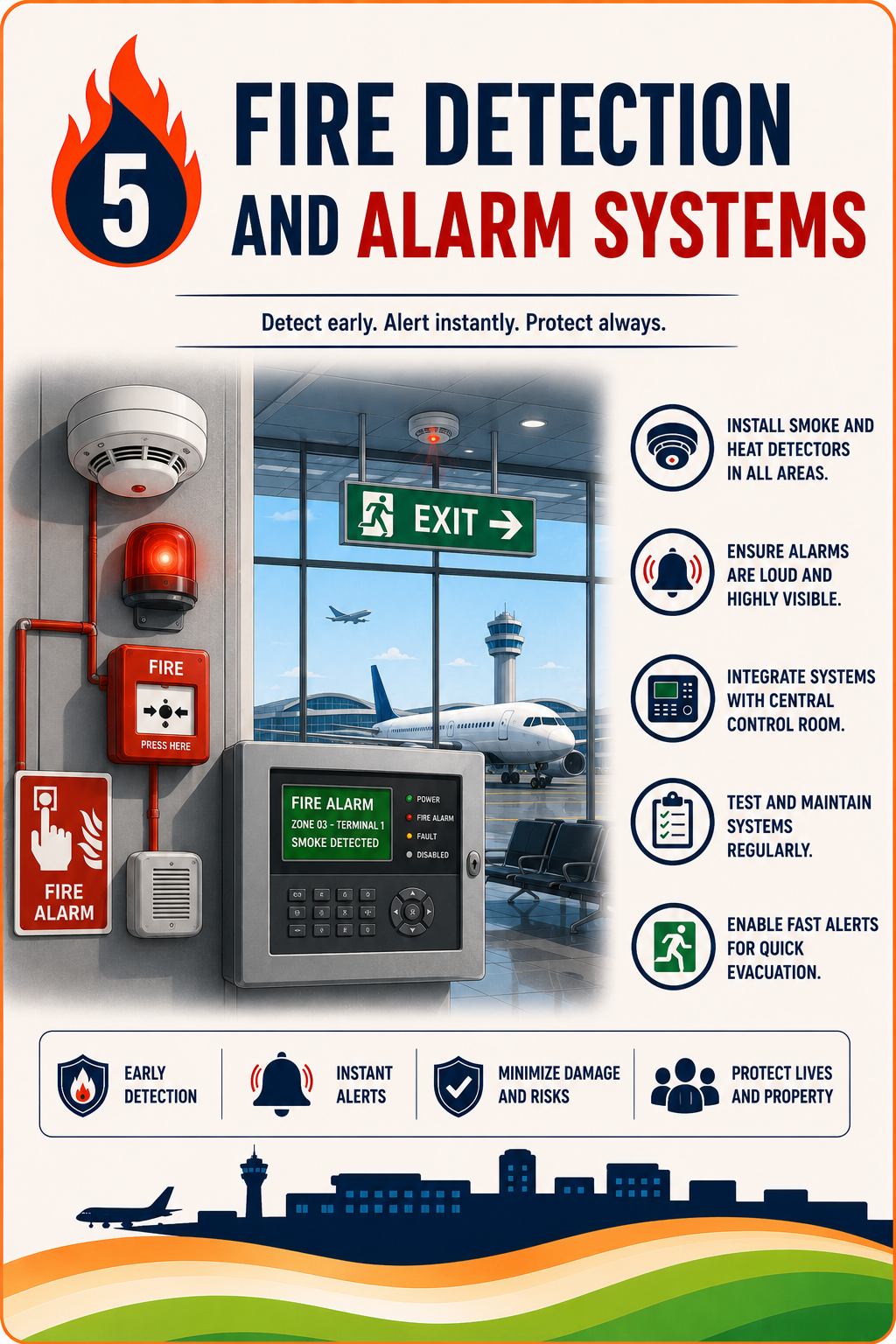
5. Fire Detection and Alarm Systems
Advanced fire detection systems help airports respond quickly and minimize risks.
Safety Tips
- Install smoke detectors across terminals.
- Maintain automatic alarm systems.
- Test fire alarms regularly.
- Integrate alarms with emergency communication systems.
- Monitor systems 24/7.
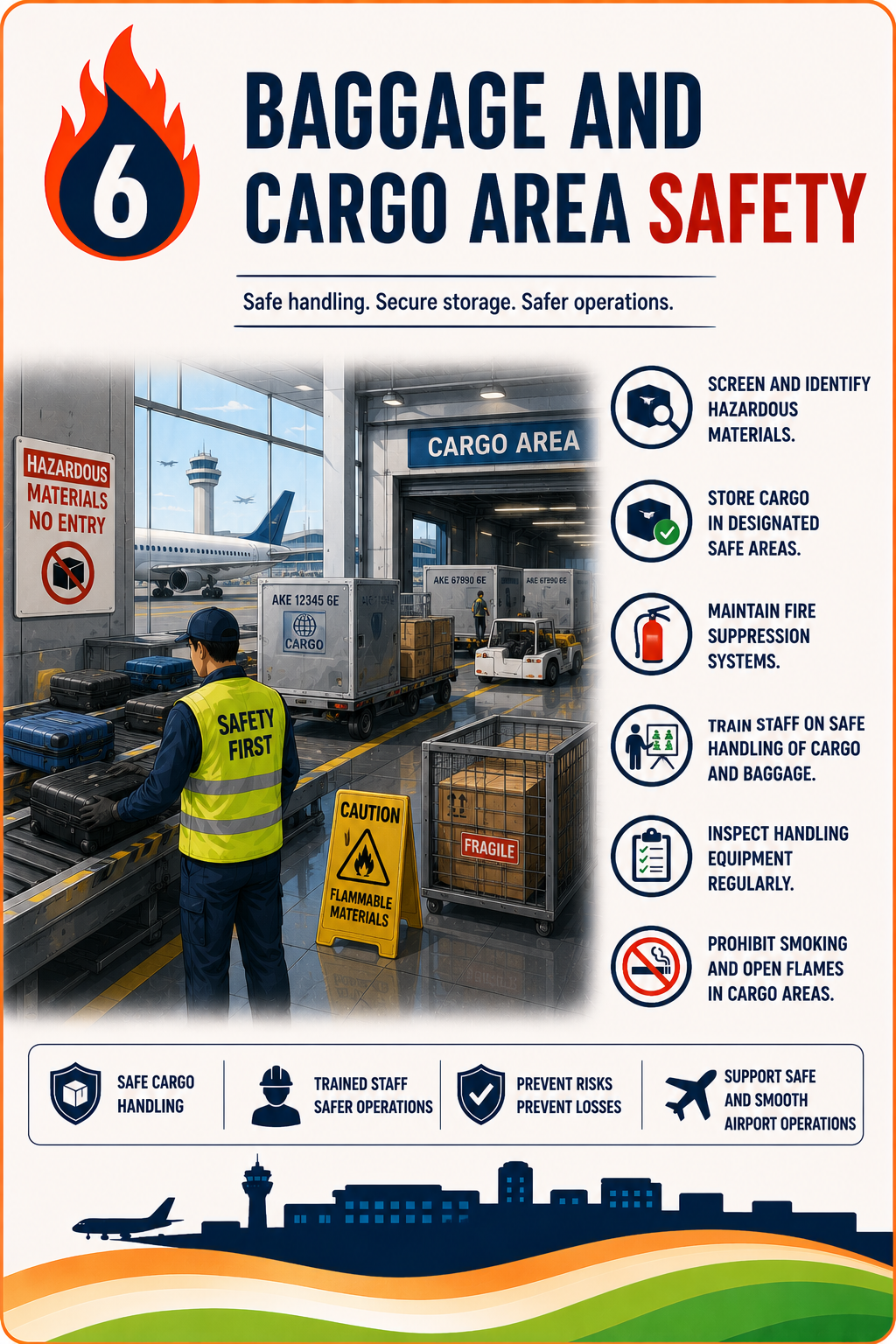
6. Baggage and Cargo Area Safety
Cargo and baggage handling zones may contain flammable materials, batteries, or hazardous goods.
Safety Tips
- Screen hazardous materials carefully.
- Store cargo safely in designated areas.
- Maintain fire suppression systems in cargo zones.
- Train staff in hazardous goods handling.
- Inspect baggage handling systems regularly.
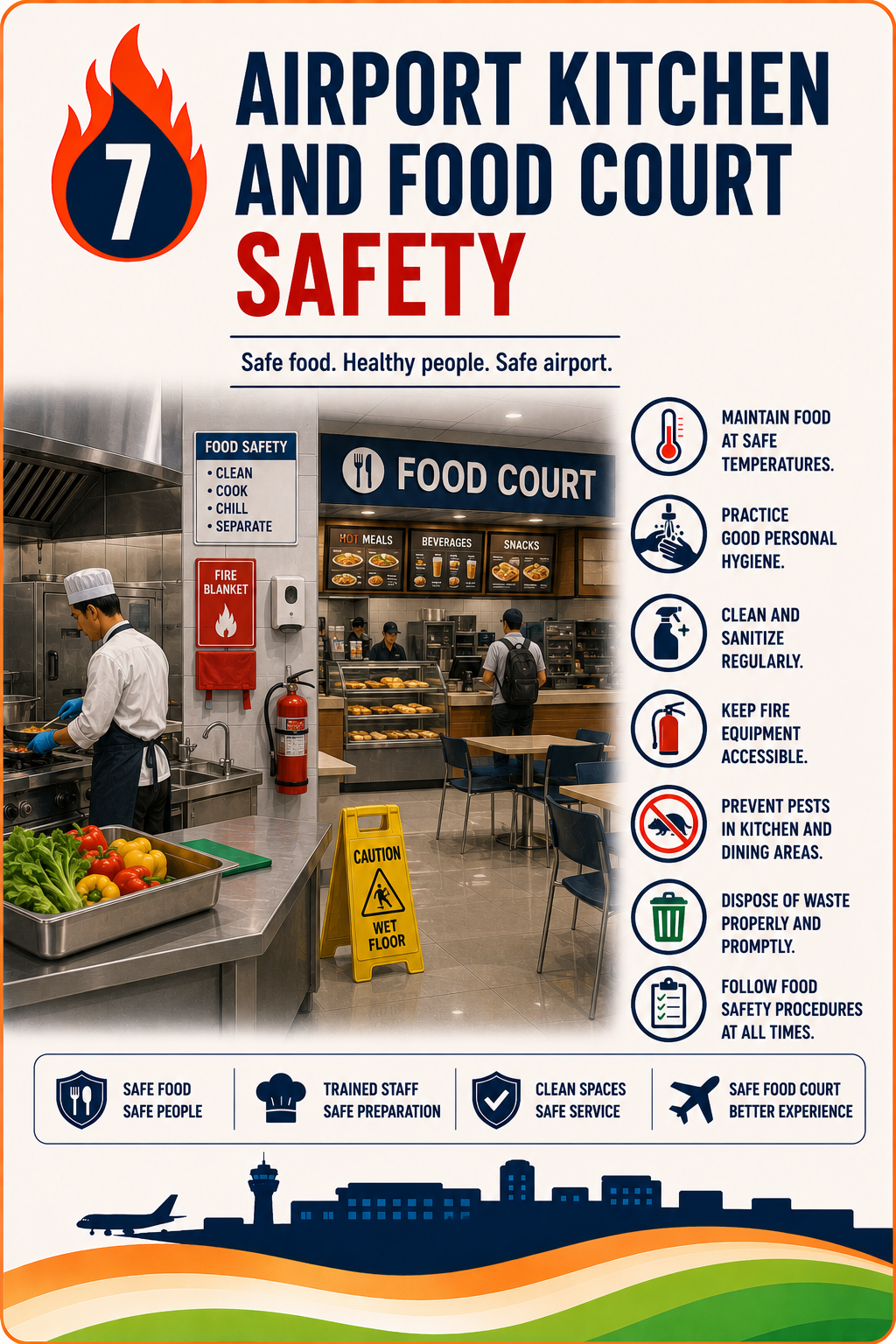
7. Airport Kitchen and Food Court Safety
Airport restaurants and kitchens involve continuous cooking operations that require proper fire safety measures.
Safety Tips
- Install kitchen fire suppression systems.
- Maintain LPG and gas pipelines safely.
- Train kitchen staff in fire response.
- Keep extinguishers accessible.
- Ensure proper ventilation in cooking areas.
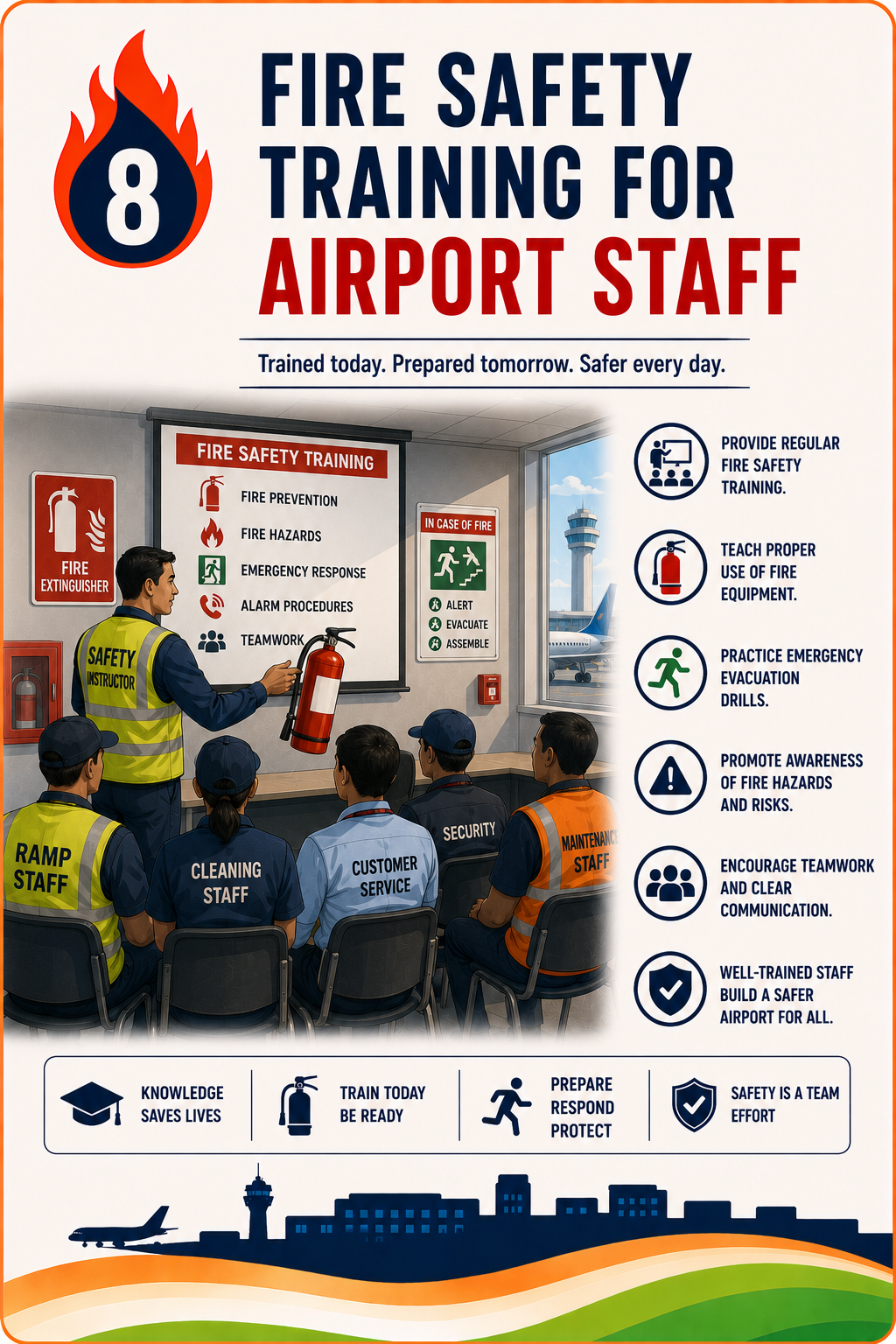
8. Fire Safety Training for Airport Staff
Regular training helps airport employees respond effectively during emergencies.
Safety Tips
- Conduct periodic fire safety workshops.
- Train staff on extinguisher usage.
- Practice evacuation and rescue drills.
- Educate employees about emergency protocols.
- Perform simulated emergency exercises.
Conclusion
Fire and safety management at airports is essential for ensuring secure aviation operations and passenger protection. Because airports handle aircraft, fuel systems, electrical infrastructure, cargo, and large public crowds, emergency preparedness must remain a top priority.
By implementing advanced firefighting systems, conducting regular safety drills, maintaining equipment properly, and training staff continuously, airports can significantly reduce fire risks and improve emergency response efficiency. Strong airport fire safety practices protect lives, maintain operational continuity, and ensure safe air travel for everyone.