

Fire and Safety at School
Schools are places where children learn, grow, and spend a significant part of their day. Ensuring fire and safety measures in schools is essential to protect students, teachers, staff, and school property from emergencies such as fires, electrical accidents, chemical hazards, and evacuation situations.
A safe school environment is built through awareness, proper planning, regular inspections, and emergency preparedness. Fire safety education should be part of school culture so that students and staff know how to prevent accidents and respond calmly during emergencies.
Below are important fire and safety use cases every school should follow to maintain a secure learning environment.
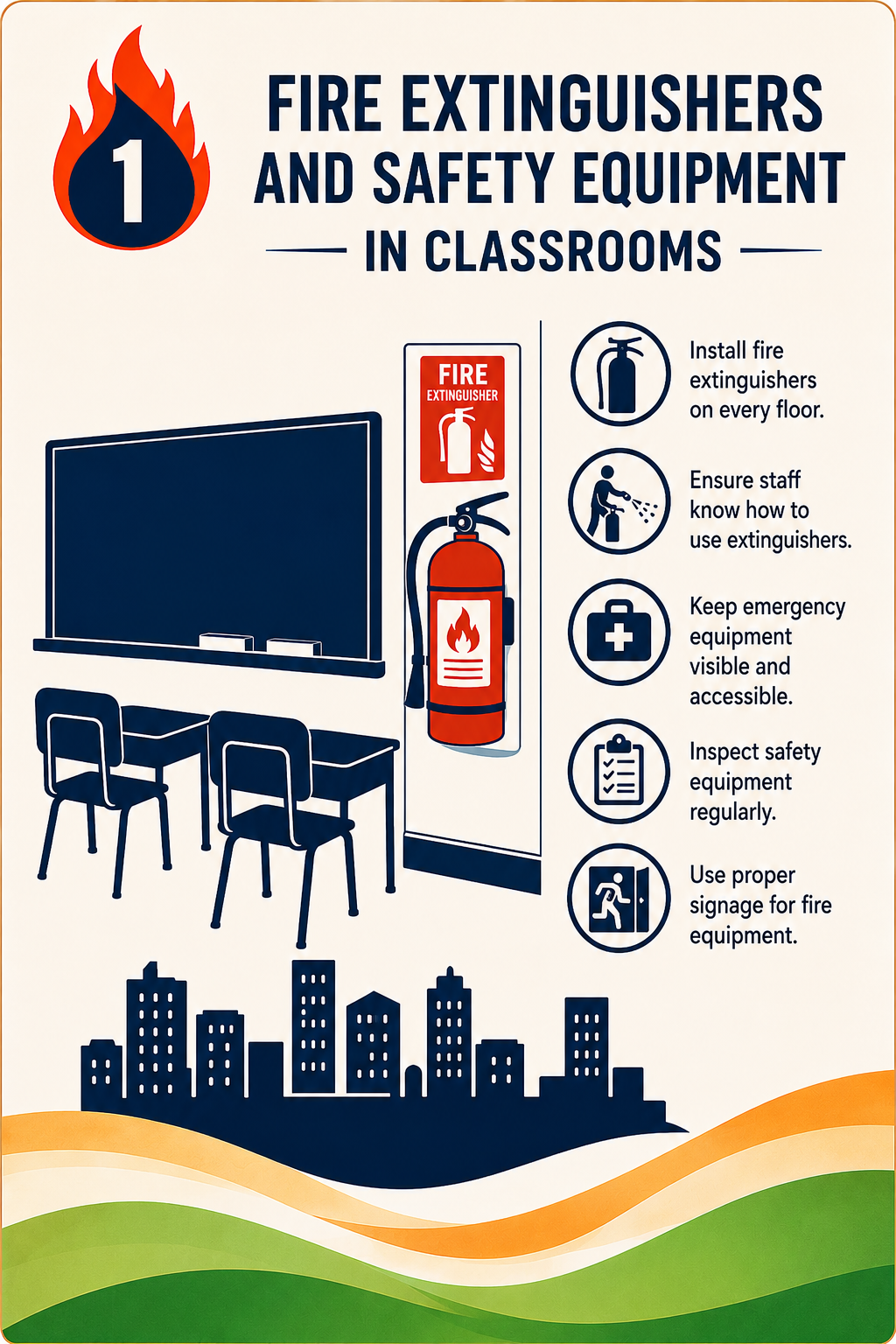
1. Fire Extinguishers and Safety Equipment in Classrooms
Every school should have properly maintained fire extinguishers and firefighting equipment placed in accessible locations.
Safety Tips
- Install fire extinguishers on every floor.
- Ensure staff know how to use extinguishers.
- Keep emergency equipment visible and accessible.
- Inspect safety equipment regularly.
- Use proper signage for fire equipment.
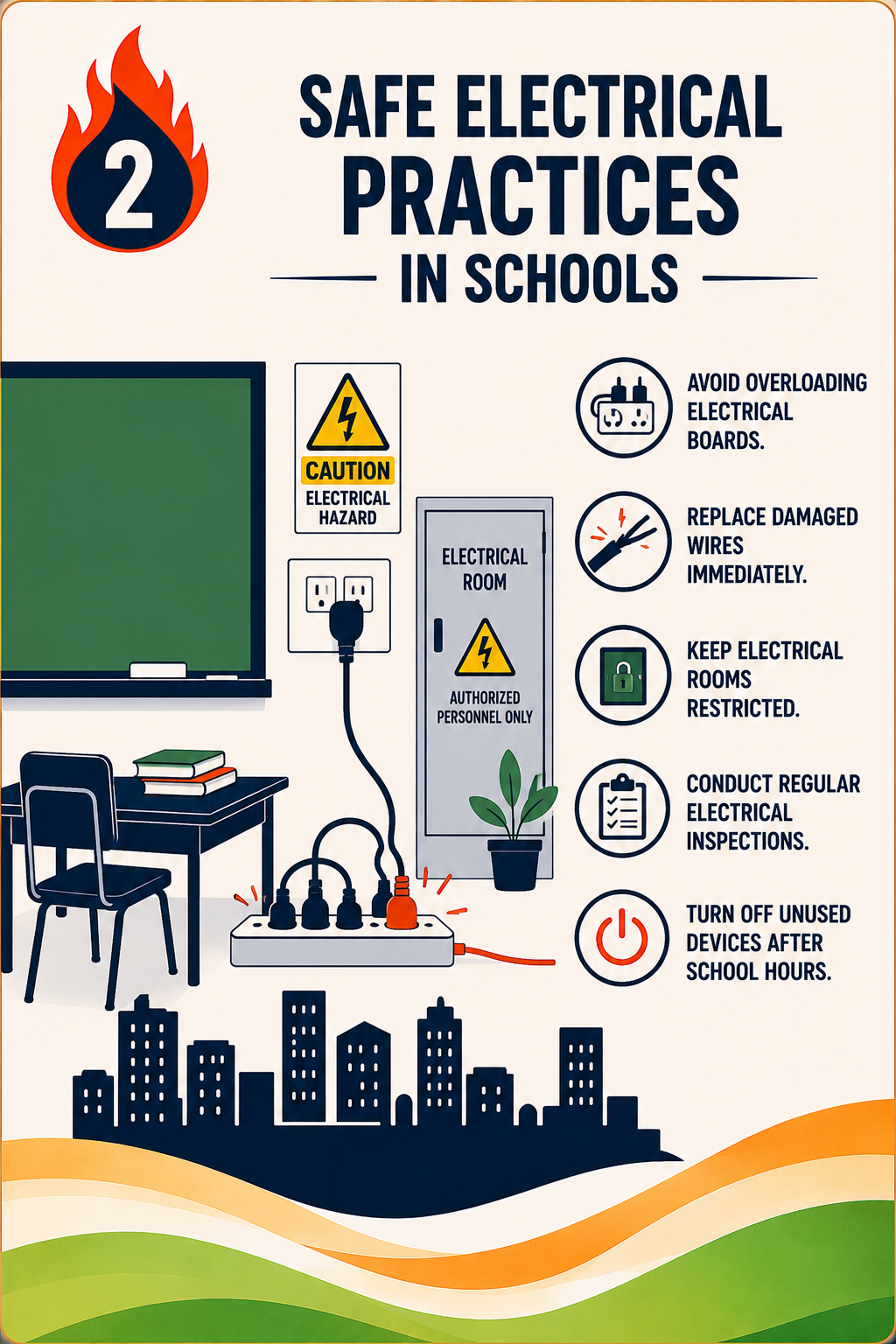
2. Safe Electrical Practices in Schools
Faulty wiring, overloaded sockets, and damaged equipment can lead to electrical hazards in schools.
Safety Tips
- Avoid overloading electrical boards.
- Replace damaged wires immediately.
- Keep electrical rooms restricted.
- Conduct regular electrical inspections.
- Turn off unused devices after school hours.
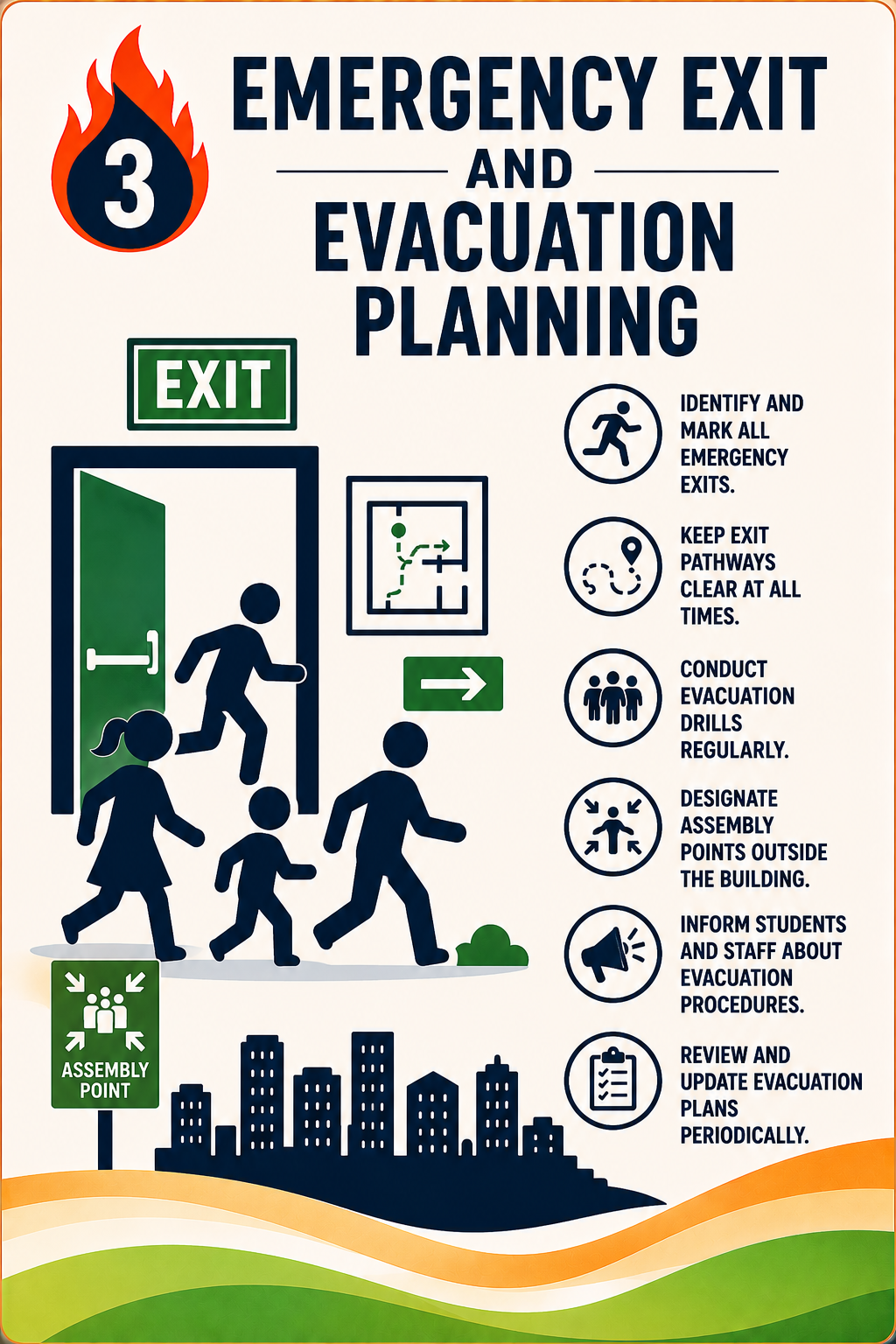
3. Emergency Exit and Evacuation Planning
Schools should have clearly marked exits and evacuation procedures to ensure safe movement during emergencies.
Safety Tips
- Mark all emergency exits clearly.
- Conduct evacuation drills regularly.
- Keep corridors free from obstruction.
- Create assembly points outside buildings.
- Display evacuation maps in classrooms.
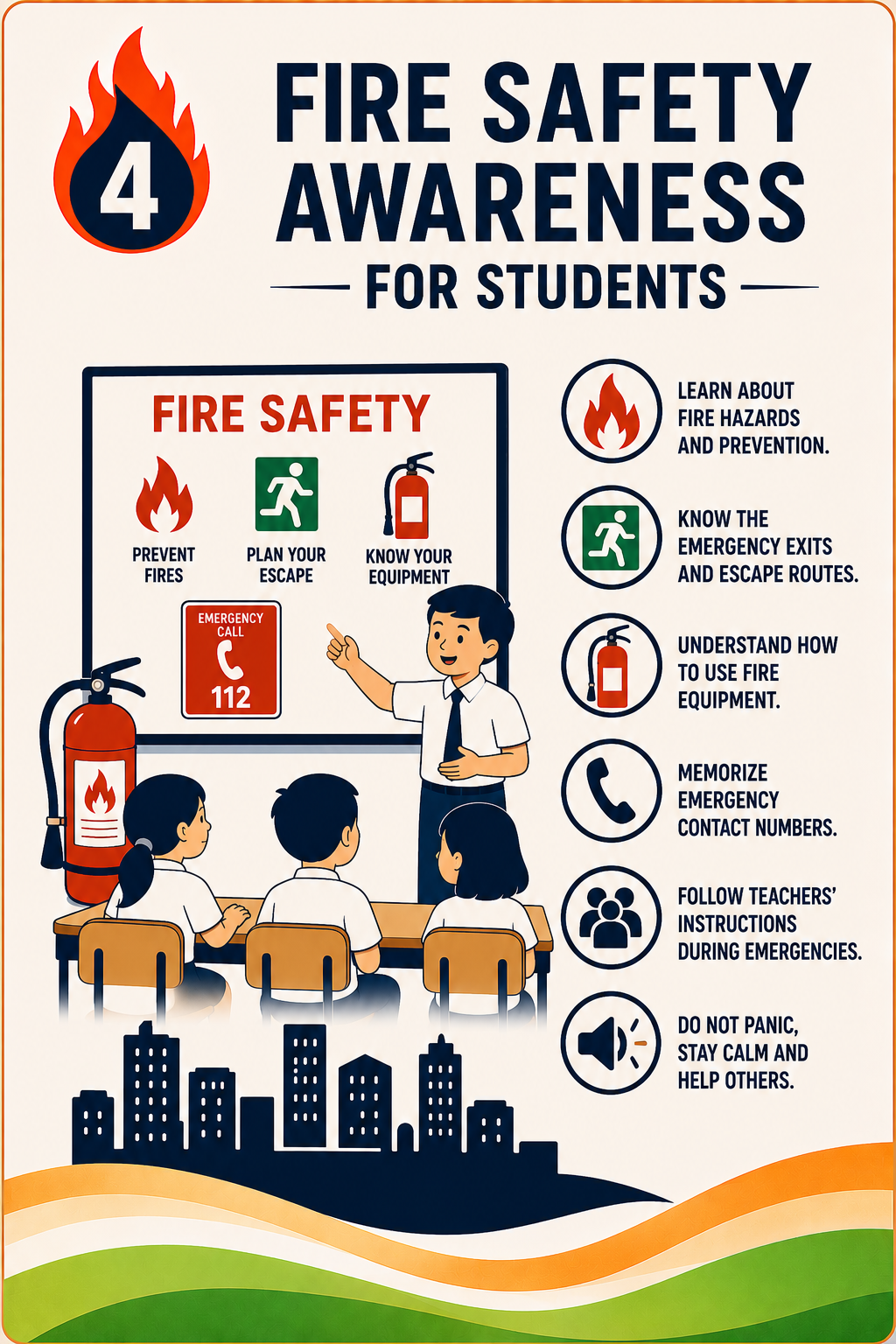
4. Fire Safety Awareness for Students
Teaching students about fire prevention helps build awareness and reduces panic during emergencies.
Safety Tips
- Educate students about fire hazards.
- Teach emergency contact numbers.
- Conduct safety awareness sessions.
- Demonstrate safe evacuation techniques.
- Encourage responsible behavior around fire.
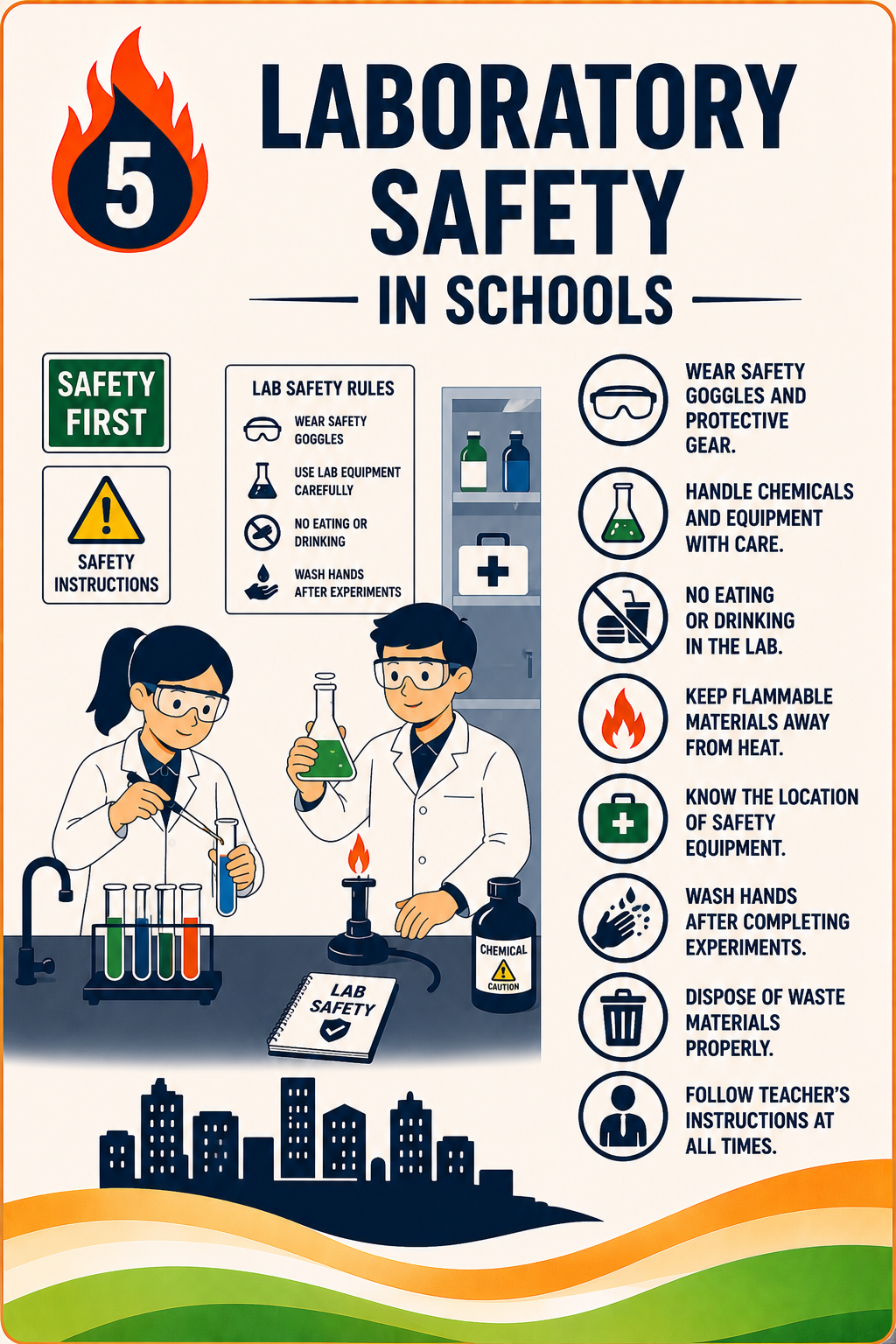
5. Laboratory Safety in Schools
Science laboratories contain chemicals, burners, and electrical equipment that require strict safety practices.
Safety Tips
- Store chemicals safely with labels.
- Use protective equipment in labs.
- Supervise experiments carefully.
- Keep fire blankets and extinguishers nearby.
- Train students on lab emergency procedures.
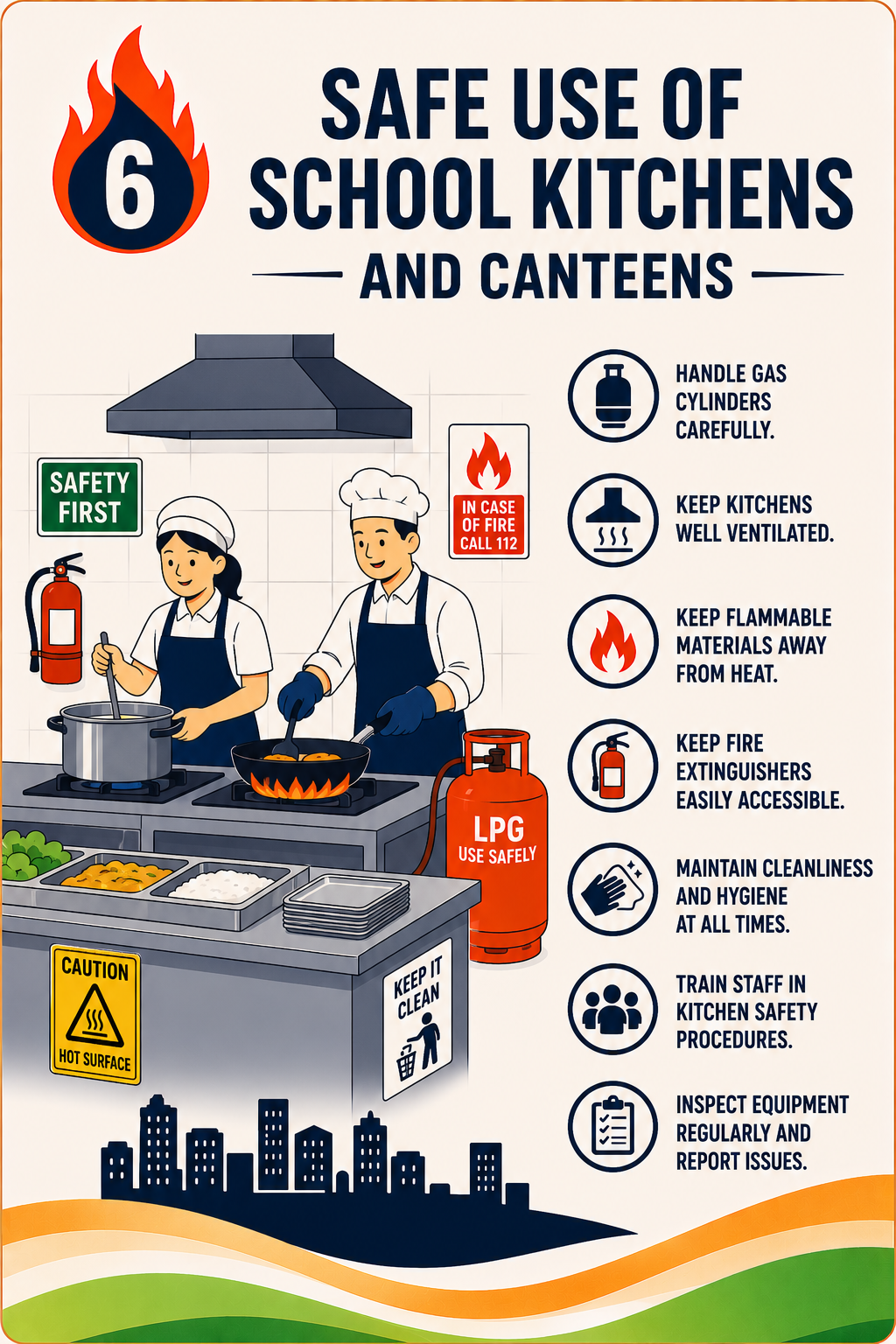
6. Safe Use of School Kitchens and Canteens
School kitchens and canteens involve cooking activities that may create fire risks if not managed properly.
Safety Tips
- Maintain LPG cylinders safely.
- Keep cooking areas clean and ventilated.
- Train kitchen staff in fire response.
- Install extinguishers near cooking zones.
- Check gas pipelines regularly.
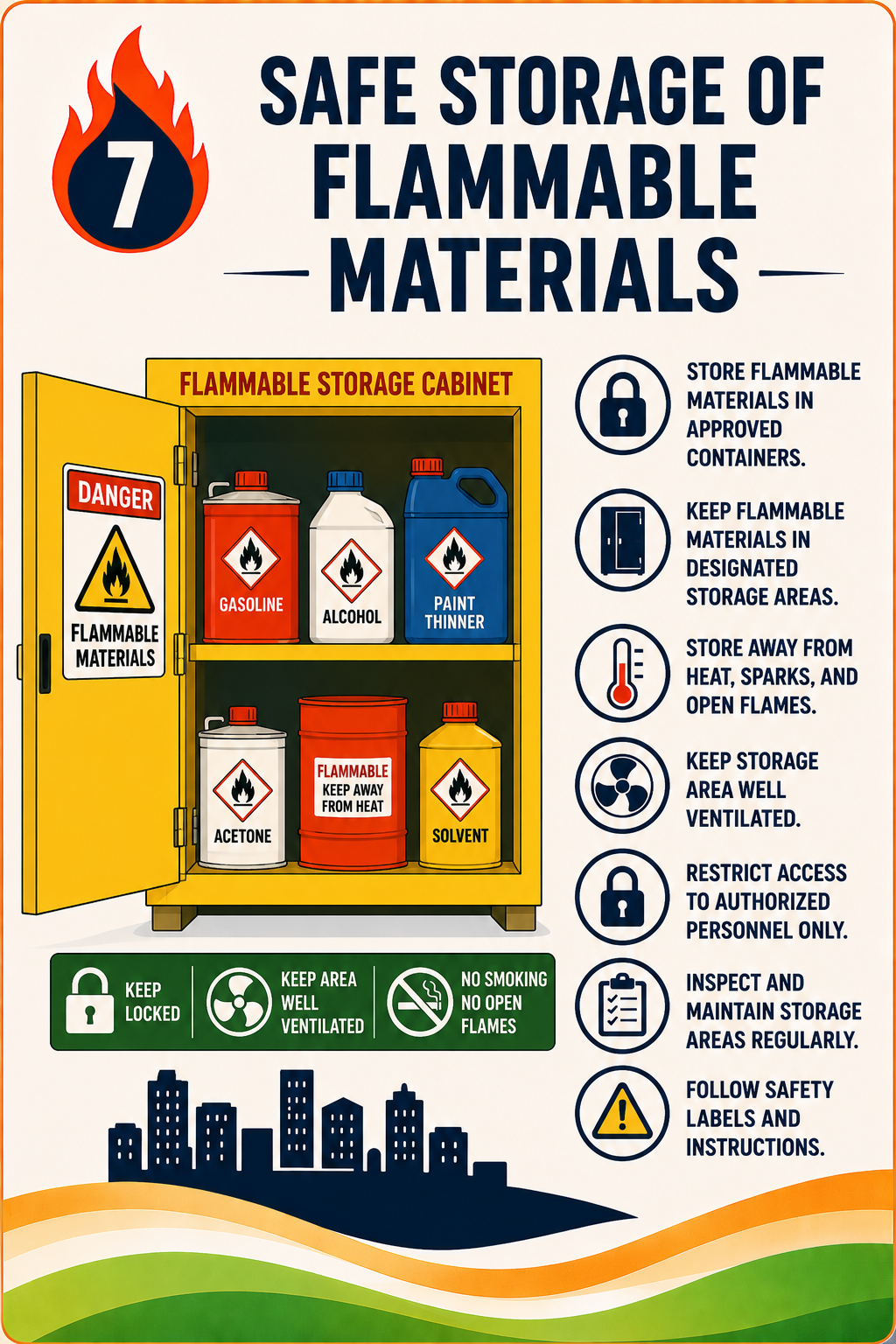
7. Safe Storage of Flammable Materials
Schools often store cleaning chemicals, paints, and laboratory materials that must be handled carefully.
Safety Tips
- Store flammable materials in secure areas.
- Keep chemicals away from classrooms.
- Use proper safety labels.
- Restrict access to storage rooms.
- Avoid storing excess combustible materials.
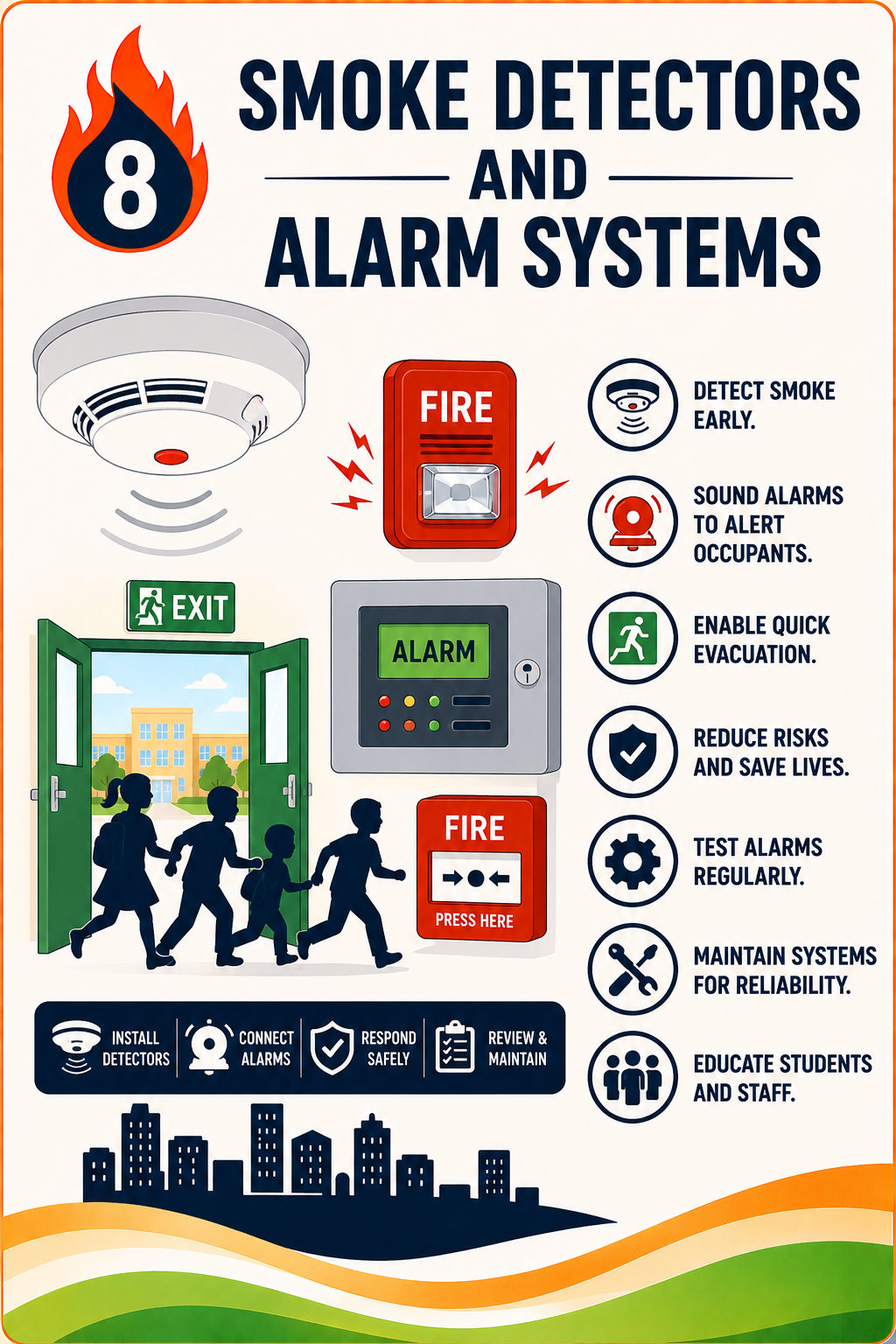
8. Smoke Detectors and Alarm Systems
Early warning systems help schools respond quickly during emergencies and reduce risks.
Safety Tips
- Install smoke detectors in key areas.
- Test alarms regularly.
- Ensure alarms are audible throughout the school.
- Train students to respond calmly to alarms.
- Maintain emergency communication systems.
Conclusion
Fire and safety in schools are critical for protecting students, teachers, and staff while creating a secure learning environment. Schools must focus on prevention, preparedness, and awareness to minimize risks and ensure quick response during emergencies.
Regular safety inspections, fire drills, proper emergency planning, and student education can greatly improve school safety standards. When schools prioritize fire safety, they not only protect lives but also build confidence and preparedness among students and educators.