
Fire and Safety at Home
Home is the place where families should feel safest. However, many household accidents such as fires, electrical shocks, gas leaks, burns, and slips happen because of small mistakes or lack of awareness. Practicing fire and safety measures at home can prevent injuries, protect property, and save lives.
Creating a safe home environment does not always require expensive equipment. Simple habits such as checking electrical appliances, storing flammable materials safely, and teaching children emergency procedures can make a huge difference. Every family should understand basic fire prevention methods and emergency response actions.
Below are some important home fire and safety use cases that every household should follow.
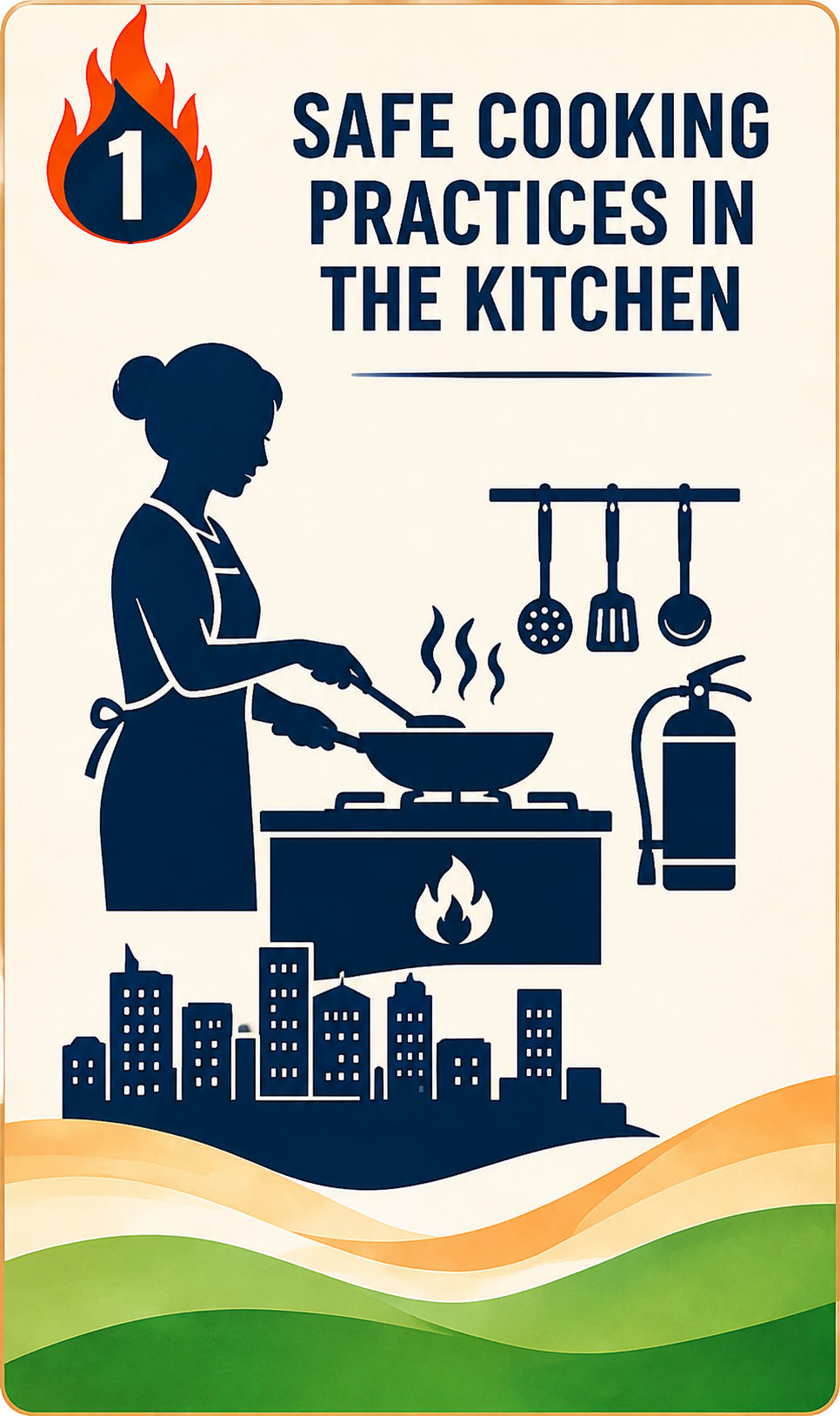
1. Safe Cooking Practices in the Kitchen
The kitchen is one of the most common places where home fires begin. Unattended cooking, oil spills, and gas leaks can quickly turn dangerous.
Safety Tips
- Never leave cooking unattended.
- Keep flammable items away from the stove.
- Turn off gas cylinders after use.
- Use fire-resistant gloves while handling hot utensils.
- Keep a fire extinguisher nearby.
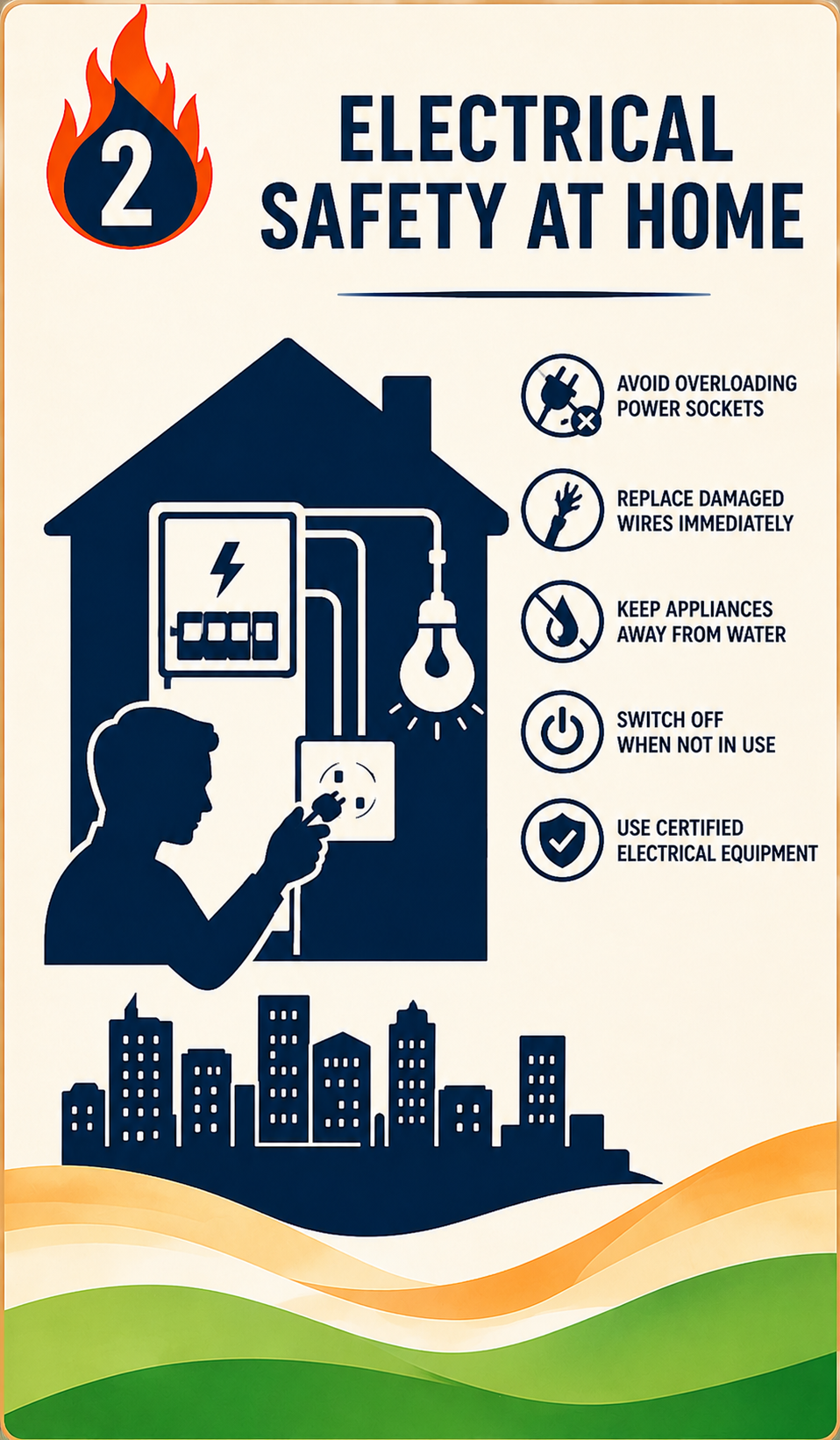
2. Electrical Safety at Home
Faulty wiring and overloaded power sockets can cause electrical fires and shocks.
Safety Tips
- Avoid overloading extension boards.
- Replace damaged wires immediately.
- Keep electrical appliances away from water.
- Switch off appliances when not in use.
- Use certified electrical equipment.
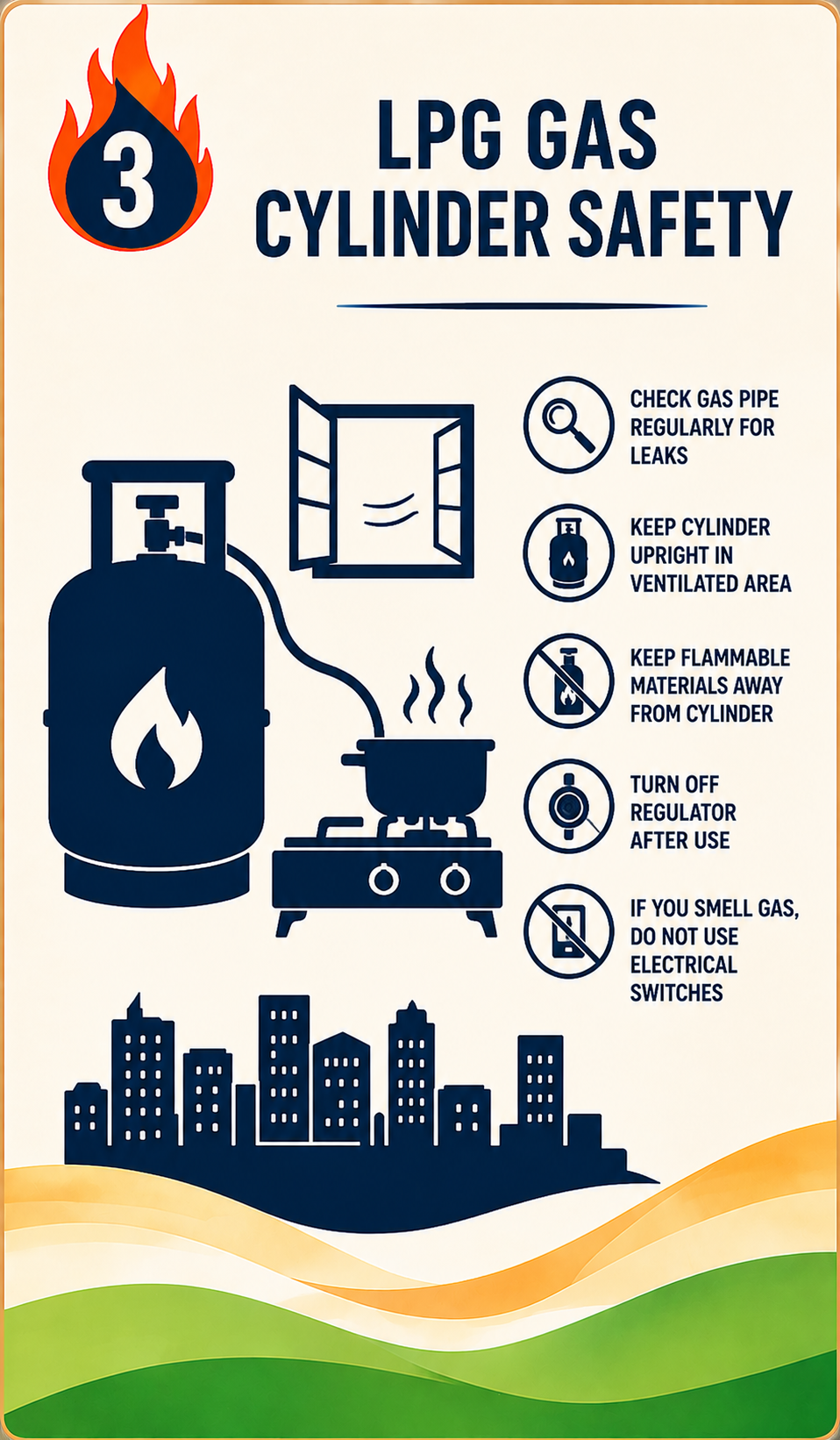
3. LPG Gas Cylinder Safety
Improper handling of LPG cylinders can lead to gas leaks, explosions, and fire accidents.
Safety Tips
- Check gas pipes regularly for leakage.
- Keep cylinders upright in ventilated areas.
- Do not store flammable materials near cylinders.
- Turn off the regulator after cooking.
- If gas smell is detected, avoid using electrical switches.
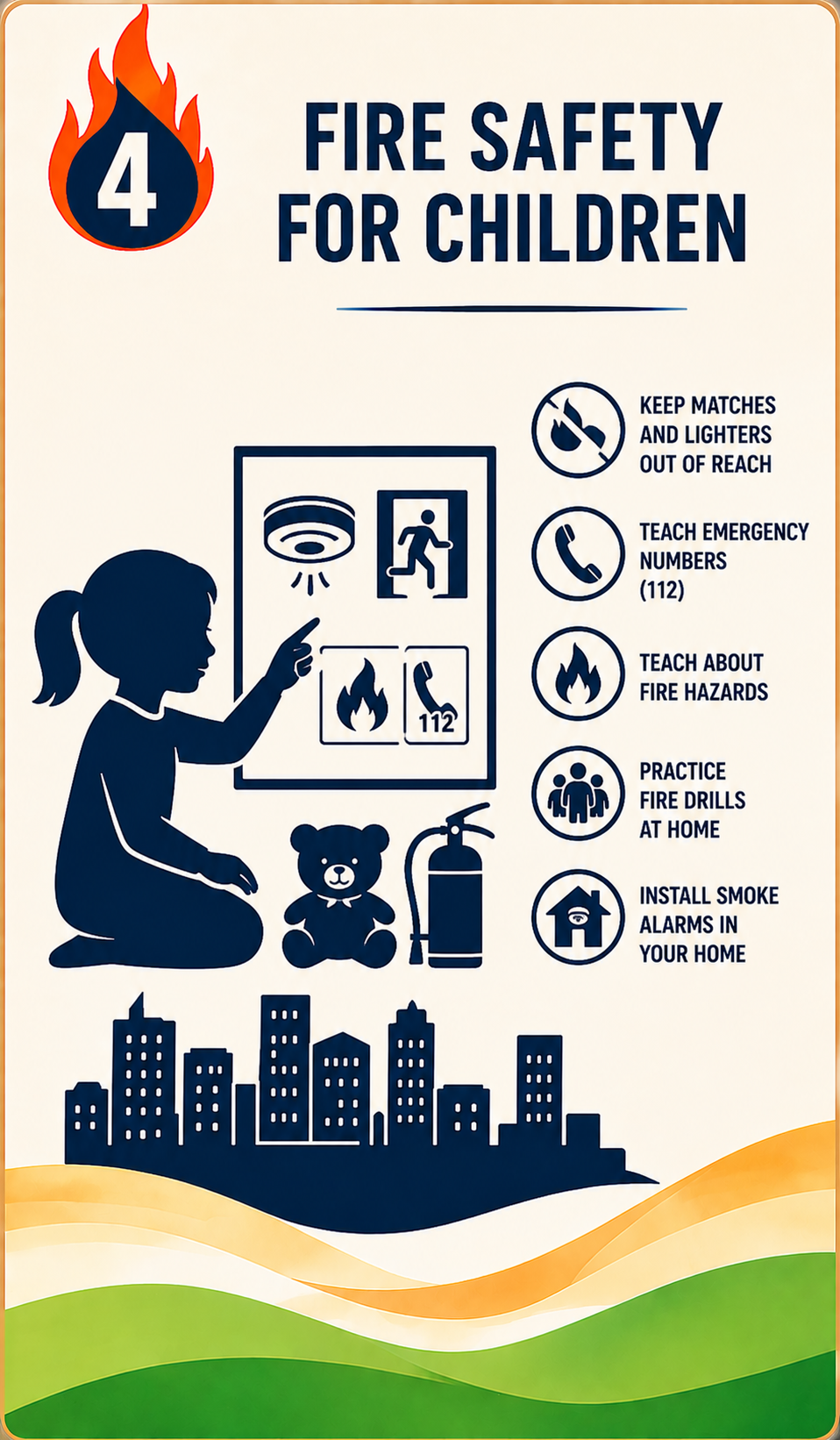
4. Fire Safety for Children
Children may unknowingly play with matches, candles, or electrical devices, increasing fire risk.
Safety Tips
- Keep matches and lighters out of reach.
- Teach children emergency contact numbers.
- Educate them about fire hazards.
- Practice home evacuation drills.
- Install smoke alarms in the house.
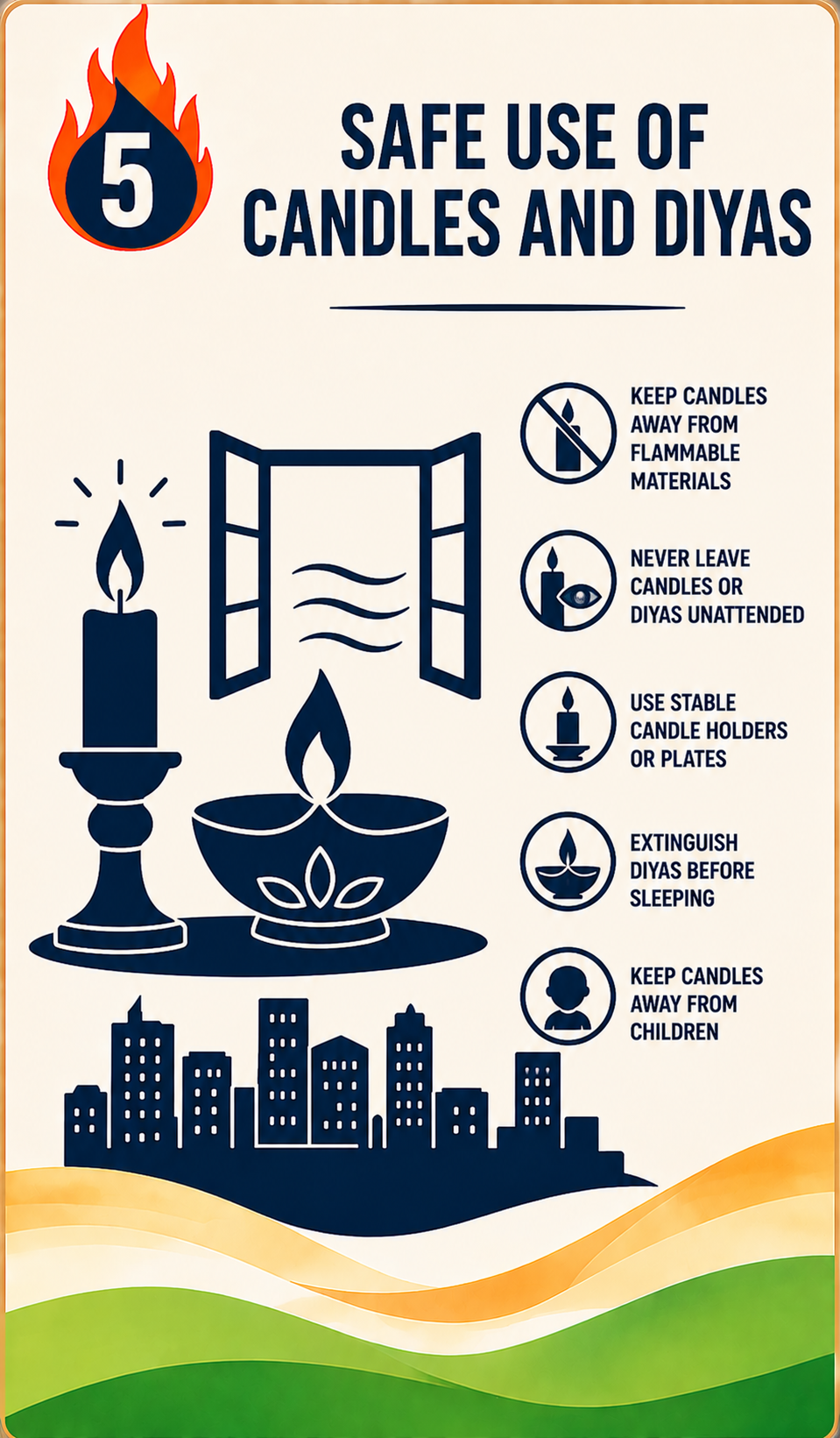
5. Safe Use of Candles and Diyas
Candles and diyas are commonly used during festivals and power cuts, but they can easily start fires.
Safety Tips
- Keep candles away from curtains and paper.
- Never leave candles unattended.
- Use stable candle holders.
- Extinguish diyas before sleeping.
- Avoid placing candles near children.
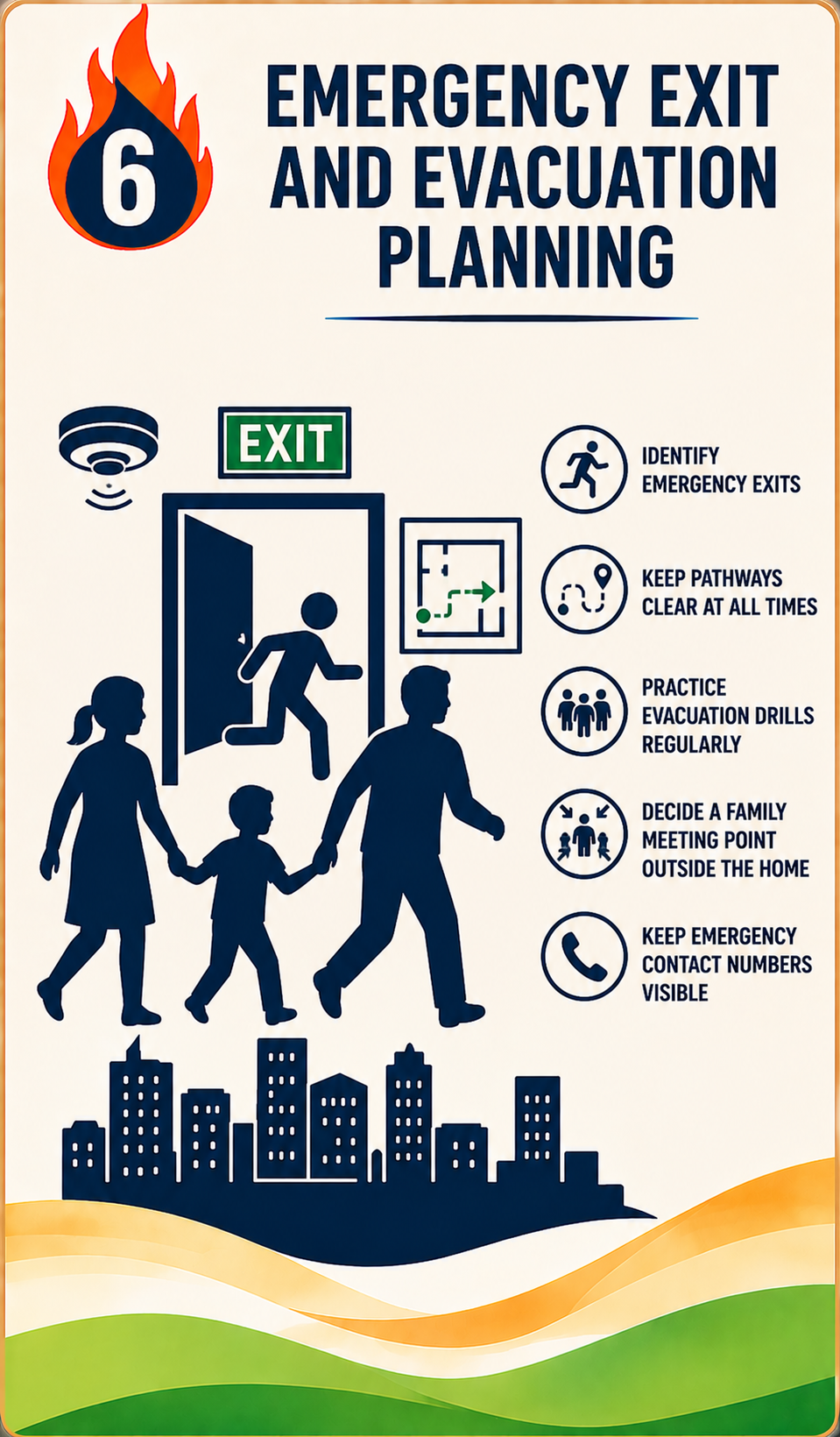
6. Emergency Exit and Evacuation Planning
Every family should know how to evacuate safely during a fire or emergency.
Safety Tips
- Identify emergency exits in the house.
- Keep pathways clear of obstacles.
- Practice evacuation drills regularly.
- Decide a family meeting point outside the home.
- Keep emergency contact numbers visible.
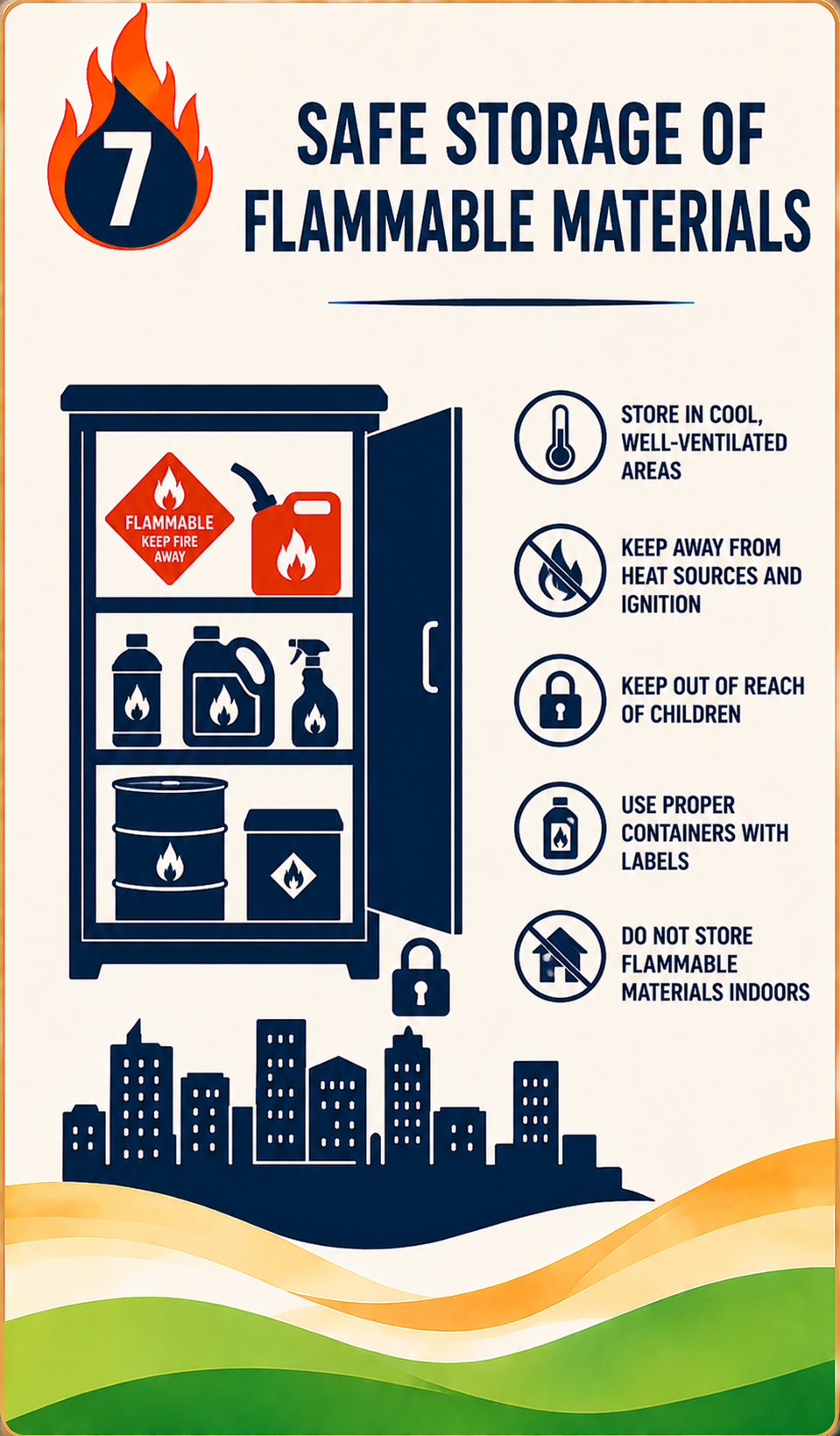
7. Safe Storage of Flammable Materials
Improper storage of fuels, chemicals, and cleaning agents can increase fire hazards.
Safety Tips
- Store flammable liquids in cool areas.
- Keep chemicals away from children.
- Avoid storing petrol indoors.
- Use proper containers with labels.
- Keep materials away from heat sources.
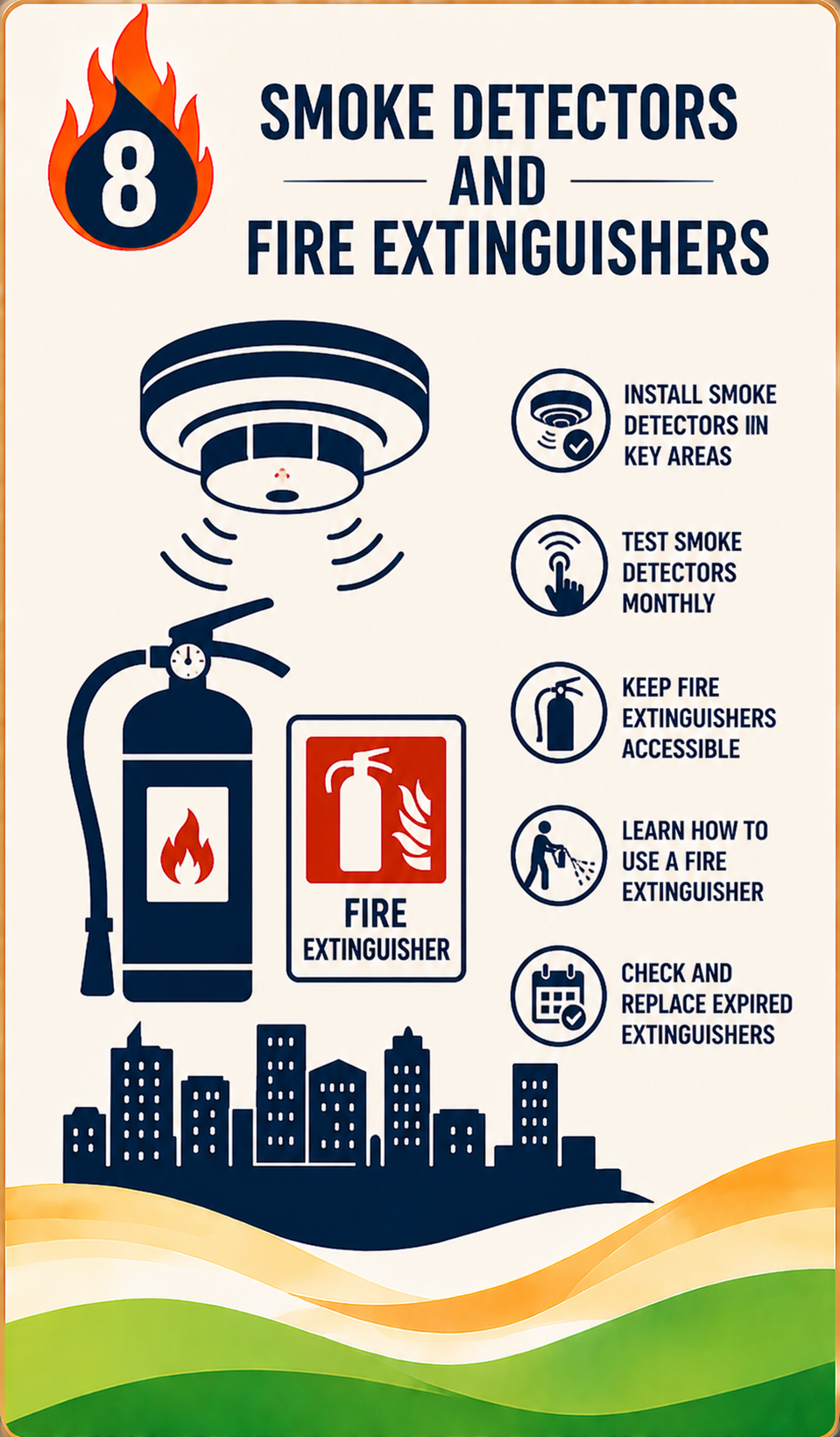
8. Smoke Detectors and Fire Extinguishers
Early warning systems and firefighting equipment help control emergencies before they spread.
Safety Tips
- Install smoke detectors in key areas.
- Test smoke alarms monthly.
- Learn how to use a fire extinguisher.
- Keep extinguishers accessible.
- Replace expired extinguishers.
Conclusion
Fire and safety awareness at home is essential for protecting lives and property. Most home accidents can be prevented through simple precautions, regular inspections, and family awareness. Safety should become a daily habit rather than an occasional activity.
By following safe cooking methods, practicing electrical safety, preparing emergency plans, and teaching children about hazards, families can create a safer and more secure living environment. A prepared home is a protected home.